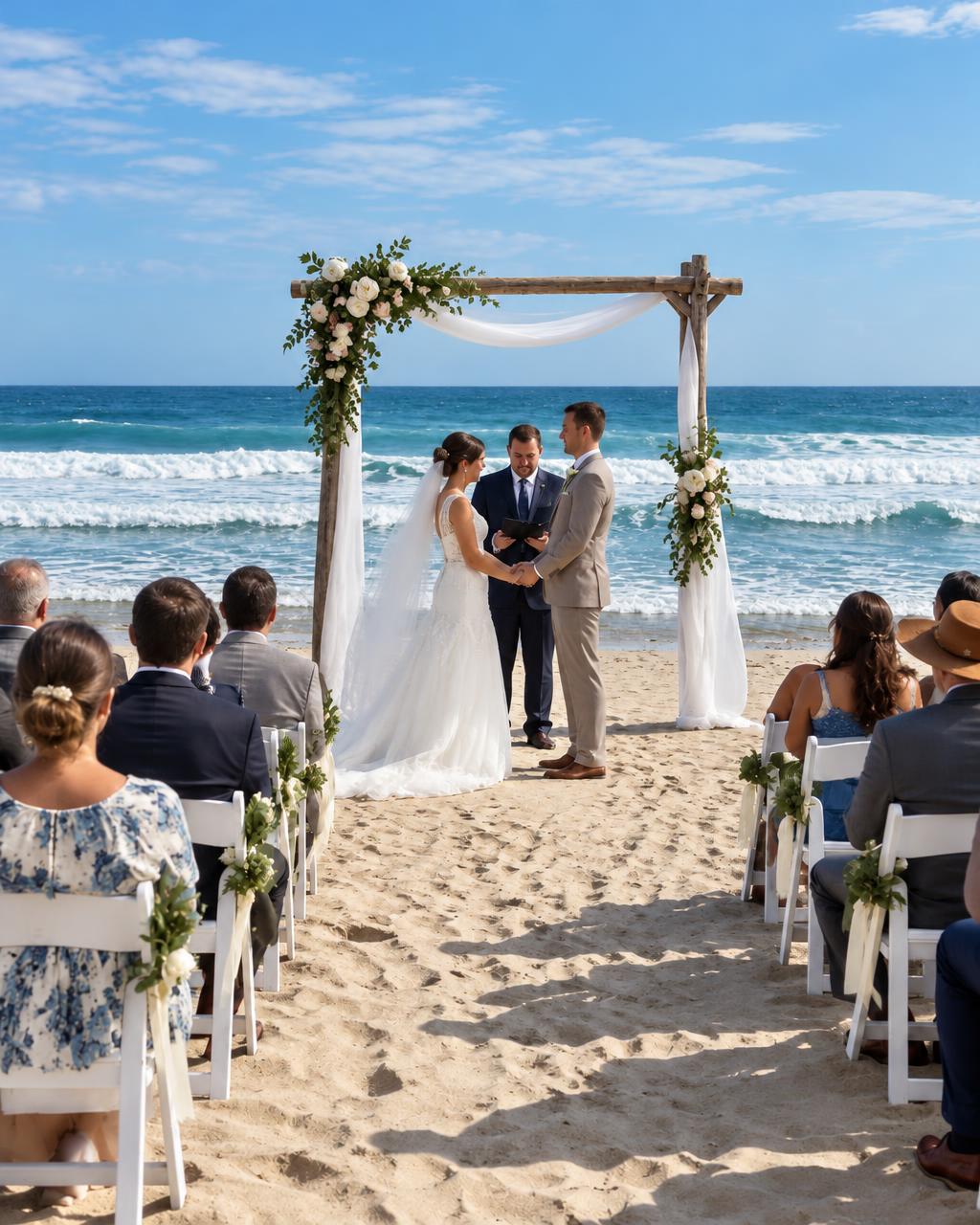
Florida remains one of the most sought-after destination wedding settings, welcoming couples who travel from across the country to exchange their vows under swaying palms, historic oaks, and brilliant sunshine. While choosing your aesthetic, organizing guest accommodations, and writing heartfelt vows often take center stage during the planning process, managing the legal foundation is what officially solidifies your union. Understanding how state regulations and county procedures function ensures your arrival in Florida is joyful and free from unexpected bureaucratic headaches.
Traveling into Florida from another state means aligning your itinerary with official county courthouse schedules and adhering to state-specific statutory guidelines. Fortunately, Florida offers an accessible, streamlined process for non-residents, provided you understand the essential rules beforehand. From identification requirements to signature deadlines, this guide walks you through every practical step necessary to secure your Florida marriage license efficiently so you can focus entirely on your wedding ceremony.
Tip 01
Understand County Clerk Jurisdiction
One of the most convenient aspects of getting married in Florida is that a marriage license issued by any Florida county Clerk of the Circuit Court is valid anywhere within the state. You do not need to apply in the specific county where your ceremony occurs, which offers incredible logistical flexibility for traveling couples. If your flights bring you into one region a few days early, you can complete the licensing process at that local courthouse regardless of where your venue sits.
This flexibility allows you to select a clerk location that fits neatly into your travel itinerary or offers the shortest wait times. When researching courthouses, always confirm current office hours and public procedures with that specific county clerk of court, as operational details can vary slightly between locations. Keeping your options open across nearby counties can save you hours of travel time during a busy wedding week.
Tip 02
Benefit from the Non-Resident Waiting Period Exemption
Florida law imposes a mandatory three-day waiting period between application and license activation for Florida residents who have not completed a certified premarital preparation course. However, out-of-state couples enjoy a significant advantage: if neither applicant is a Florida resident, the three-day waiting period does not apply. This means non-resident couples can obtain a marriage license that becomes valid immediately upon issuance by the clerk.
This statutory exemption makes destination ceremonies far simpler to schedule without having to arrive in Florida a full week in advance. Even so, you should never leave this task until the day of your wedding. Give yourselves at least one or two business days between your courthouse visit and the ceremony to accommodate unexpected traffic, courthouse lines, or scheduling delays, ensuring your wedding morning remains calm and relaxed.
Tip 03
Monitor the Sixty-Day Expiration Window
A Florida marriage license is valid for precisely sixty days from the date of issuance. Once that sixty-day period lapses, the document expires completely, meaning it cannot legally be executed by an officiant or recorded by the court. If your license expires prior to your ceremony, you will be required to restart the entire application process from the beginning and pay all required statutory fees again.
Because of this strict sixty-day window, you cannot complete your application months ahead of your trip. Map out your calendar carefully to ensure your courthouse appointment or walk-in visit falls comfortably within the two-month period leading up to your ceremony date. Most destination couples choose to handle this step during an advance planning visit or in the days immediately preceding their scheduled celebration.
Tip 04
Prepare Valid Government Identification
To obtain a Florida marriage license, both individuals must provide valid, unexpired government-issued photo identification that clearly confirms their full legal name and date of birth. Accepted forms of identification generally include state driver licenses, state identification cards, valid United States passports, or military IDs. Foreign passports or official alien registration cards are also typically accepted for visitors from other countries.
Ensure that the identification you present reflects your current legal name and that none of your documents will expire before your wedding date. Inconsistencies between your official ID and your application paperwork can halt the process entirely. Always review the exact identification criteria listed on the county clerk website you plan to visit to avoid any administrative holdups upon arrival.
Tip 05
Verify Your Social Security Information
United States citizens and permanent residents must provide their Social Security numbers on the Florida marriage application. While you generally do not need to present the physical Social Security card itself, you must know your exact number so it can be recorded on the official legal documentation. The clerk uses this information for identification verification and vital statistics records according to state statutes.
If either applicant is a citizen of another country who has not been issued a United States Social Security number, you must present a valid passport or alien registration number instead. Double-check your numbers prior to leaving home, as simple typographical errors on the initial paperwork can cause significant delays when recording the license after the ceremony has concluded.
Tip 06
Bring Accurate Prior Marriage Details
If either party has been previously married, Florida law requires you to disclose the exact date that the most recent marriage ended, whether by divorce, annulment, or death. In many cases, you will simply need to provide the precise date, month, and year of the dissolution on your application form. However, some county clerks may request a certified copy of the final judgment if the dissolution occurred recently.
To protect against potential complications, obtain a certified copy of your divorce decree or death certificate before traveling to Florida and keep it in your document folder. Reviewing these requirements directly with the county clerk in advance prevents unexpected roadblocks, ensuring you have every necessary record at your fingertips when you approach the counter.
Tip 07
Review County Pre-Application Options
Numerous Florida county clerks offer electronic pre-application portals on their websites to accelerate the licensing procedure. These digital platforms allow out-of-state couples to input their personal information, contact details, and prior marriage history from home before boarding their flights. Once submitted online, the system creates a tracking number or profile that clerk staff can access instantly during your in-person visit.
Completing the preliminary paperwork online drastically reduces the time spent sitting in courthouse waiting rooms, turning an hour-long administrative task into a swift, efficient verification meeting. Take the time to search the clerk portal for the county you intend to visit and submit your background information online a week or two before traveling south.
Tip 08
Plan Around Local Courthouse Holidays and Hours
County courthouses operate under strict governmental schedules, maintaining standard business hours Monday through Friday while remaining closed on weekends and state or federal holidays. If you plan to fly into Florida on a Friday evening for a Saturday or Sunday ceremony, you will not have access to courthouse services to acquire your license. Holiday weekends require even greater foresight due to early closures or extended holiday schedules.
Always review the official holiday calendar published by your selected clerk of court before finalizing non-refundable flight reservations. Building in an arrival day that falls on a regular business day guarantees you have ample working hours to visit the clerk, resolve any paperwork discrepancies, and head into your wedding weekend with total peace of mind.
Tip 09
Choose an Authorized Florida Officiant
Under Florida statutes, a marriage solemnization is valid only when performed by an authorized individual. Authorized officiants include ordained ministers, priests, rabbis, or other regularly ordained clergy members of any religious society, along with judicial officers, retired state judges, and Florida notaries public. Out-of-state notaries are not legally authorized to perform marriage ceremonies within Florida borders.
If a close friend or family member is officiating your ceremony, they must be legally ordained through a recognized religious entity or hold an authorized judicial standing to sign your marriage certificate. Confirm your officiant's legal qualifications well before the ceremony to ensure your marriage is recognized legally by the state without complication.
Tip 10
Coordinate In-Person Appearance Requirements
Unless specifically permitted through a designated virtual licensing program offered by certain counties, Florida law generally mandates that both applicants appear together in person before the clerk of the circuit court. During this visit, both individuals must present their identification, verify the accuracy of the application data, and sign the official documents under oath in front of the deputy clerk.
Because both partners must be present simultaneously, coordinate your travel itineraries so you arrive in Florida together. Splitting your arrival times or assuming one partner can handle the paperwork while the other checks into the resort will lead to delays. Treat your joint visit to the courthouse as a meaningful milestone on your journey to the altar.
Tip 11
Document the Spoken Ceremony and Legal Vows
While acquiring the physical license fulfills the legal prerequisites, exchanging your spoken vows remains the emotional core of the wedding day. For couples visiting Florida for an intimate ceremony or destination celebration, having a ceremony-only videography specialist ensures that every authentic word, emotional pause, and legal pronouncement is preserved forever without the intrusion of an all-day production crew.
Our Vows on Film, based in Winter Garden, specializes exclusively in ceremony-only videography across Central Florida, capturing the pure essence of the moment you exchange rings and commit to one another. Because ceremony coverage can be booked up to 12 months ahead with Signature or Heirloom, with a waitlist available for dates further out, it fits naturally into streamlined destination timelines, letting couples focus entirely on their vows while preserving a cinematic keepsake for generations.
Tip 12
Designate a Responsible Party for Post-Ceremony Signatures
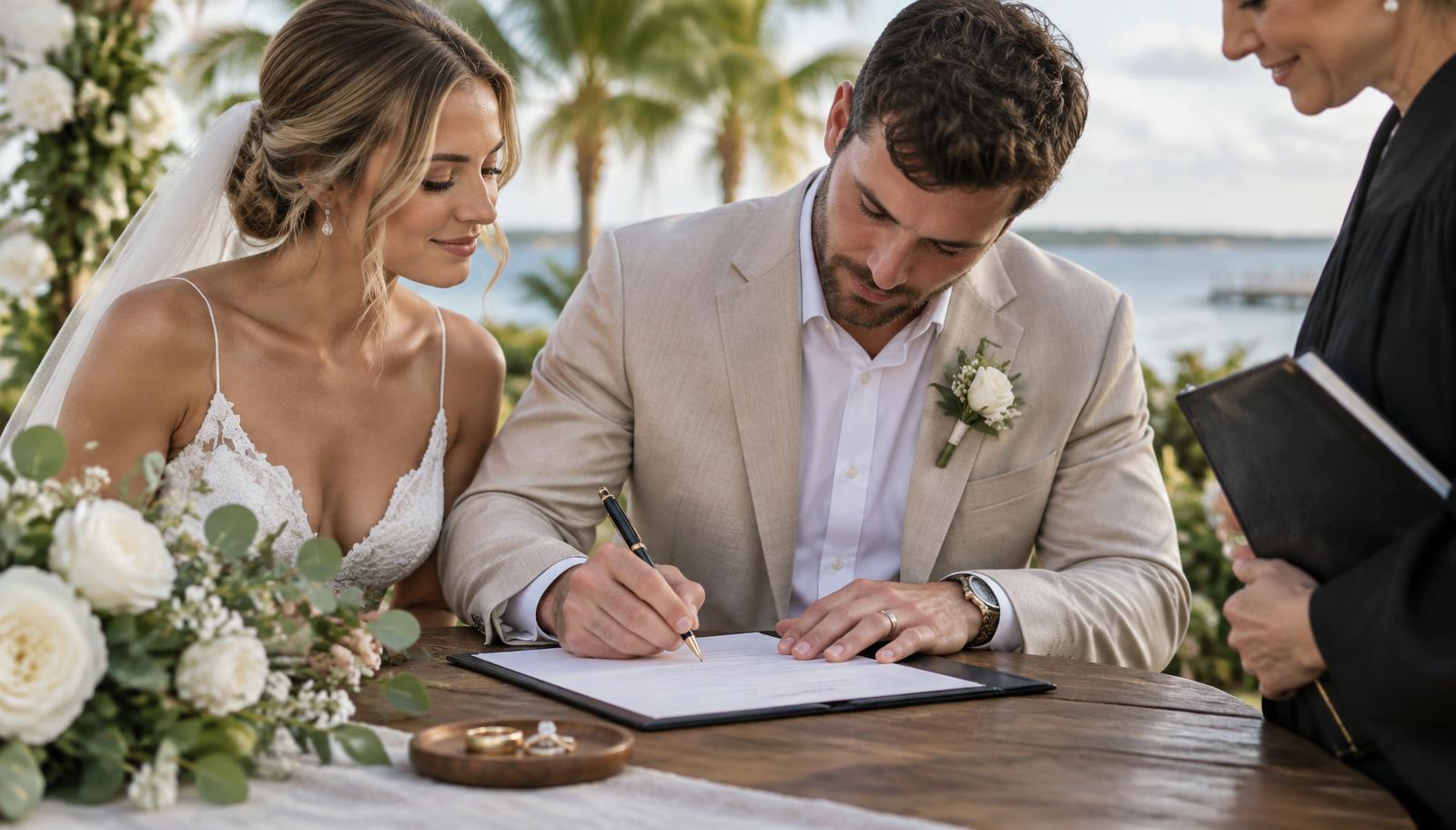
Immediately following your ceremony, your officiant must complete the marriage certificate portion of the license by filling in the ceremony date, location, and their legal title or denomination. Florida does not strictly mandate witnesses on the official marriage certificate, although designated lines may exist depending on the county form. The officiant's signature and printed credentials, however, are absolutely mandatory.
Because post-ceremony excitement, guest greetings, and cocktail celebrations can create distractions, assign a trusted wedding planner or family member to ensure the officiant completes the document before departing. Keeping the signed license in a secure, designated folder protects it from accidental spills, creasing, or misplacement during the festivities.
Tip 13
Understand the Return and Recording Timeline
Florida statutes require that the completed, signed marriage license be returned to the issuing Clerk of the Circuit Court within ten days following the ceremony. The officiant carries the legal obligation to return the document, though many traveling couples prefer to deliver it back in person if their travel schedule allows, ensuring it reaches the clerk safely before returning home.
If the document is mailed, use tracked shipping such as certified postal mail or priority courier services so you can confirm its safe delivery to the clerk's office. Once the clerk receives the executed license, it is officially recorded into county public records, transforming your application into a permanent legal document recognized nationwide.
Tip 14
Request Certified Copies for Legal Name Changes
Once your marriage license is recorded, the original document stays in the permanent custody of the county clerk. To update driver licenses, passports, banking institutions, and Social Security records back in your home state, you will need certified copies bearing the official raised or stamped seal of the Florida court. Standard photocopies or digital scans will not be accepted by government agencies.
Most county clerks allow you to pre-order certified copies when you first apply, which will be mailed directly to your out-of-state home address once recording is complete. Ordering two to three certified copies ensures you have sufficient original records to handle simultaneous name-change procedures and official account updates without needing to reorder by mail later.
Bring Your Ceremony Plan Together
Navigating out-of-state marriage licensing in Florida is a simple, manageable process when you approach it with clear expectations and advance preparation. By organizing your identification documents early, respecting courthouse business hours, and understanding the statutory timelines, you eliminate bureaucratic worries and keep your focus where it belongs: on the beauty of your upcoming celebration.
Because local practices and processing fees can vary slightly across different jurisdictions, always confirm current application procedures directly with the Florida county clerk of court where you plan to finalize your paperwork. With your legal foundation securely established, you can step into your Florida wedding ceremony with complete confidence, ready to celebrate a lifetime of love and commitment.
Explore my wedding ceremony videos, compare ceremony collections, or check your wedding date. Every collection can be booked up to 12 months ahead; couples planning further ahead can join the waitlist without reserving a date.