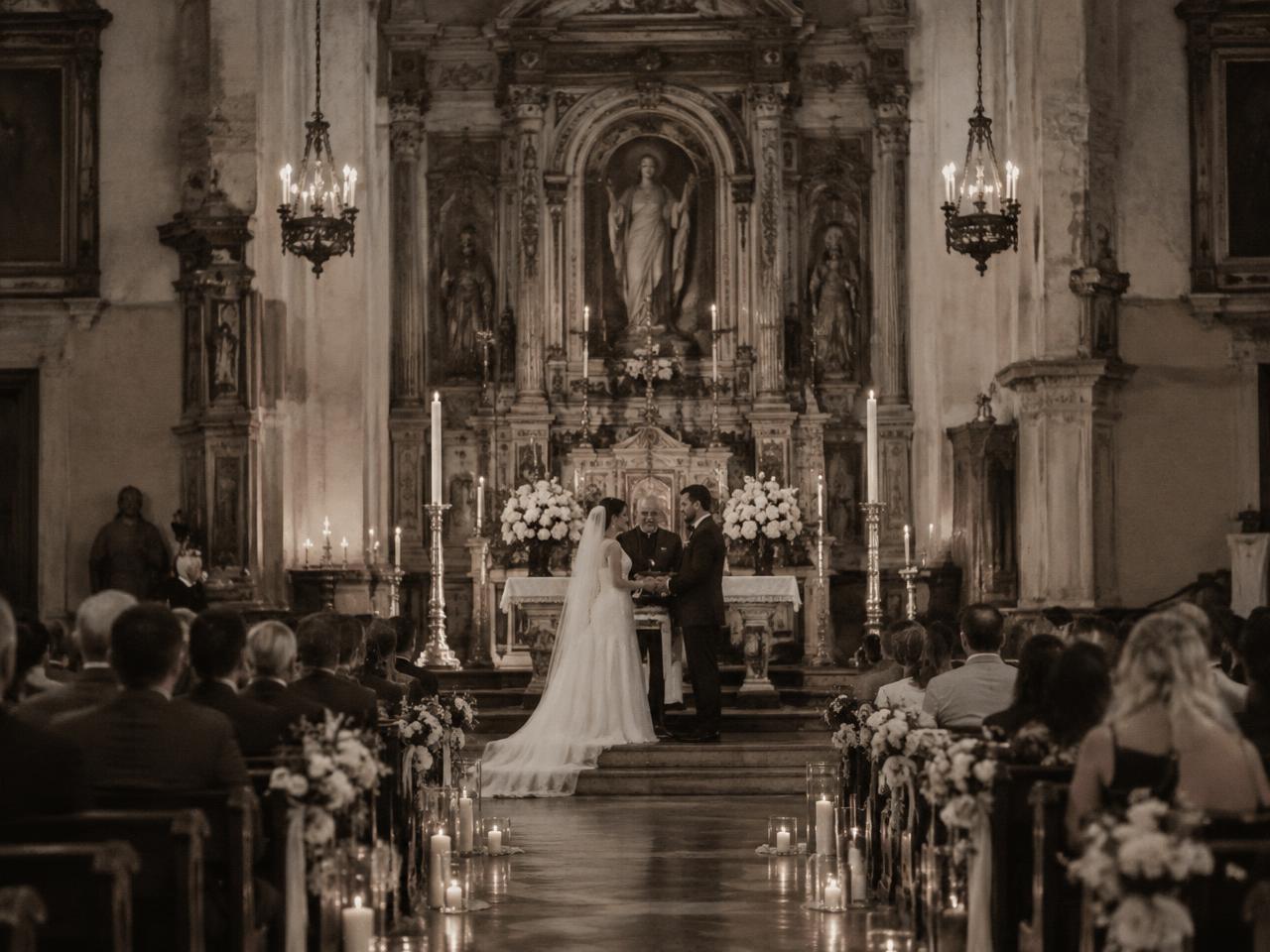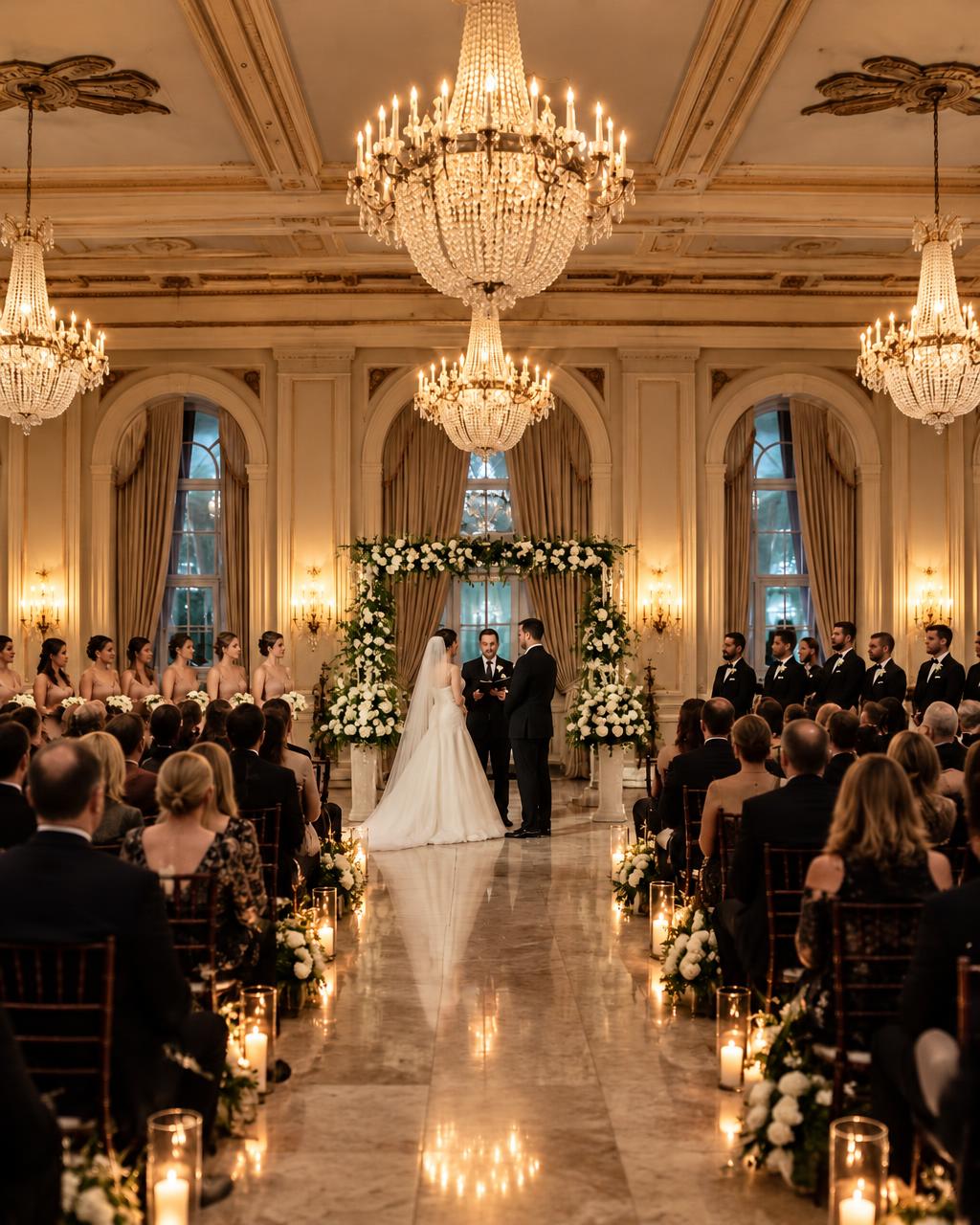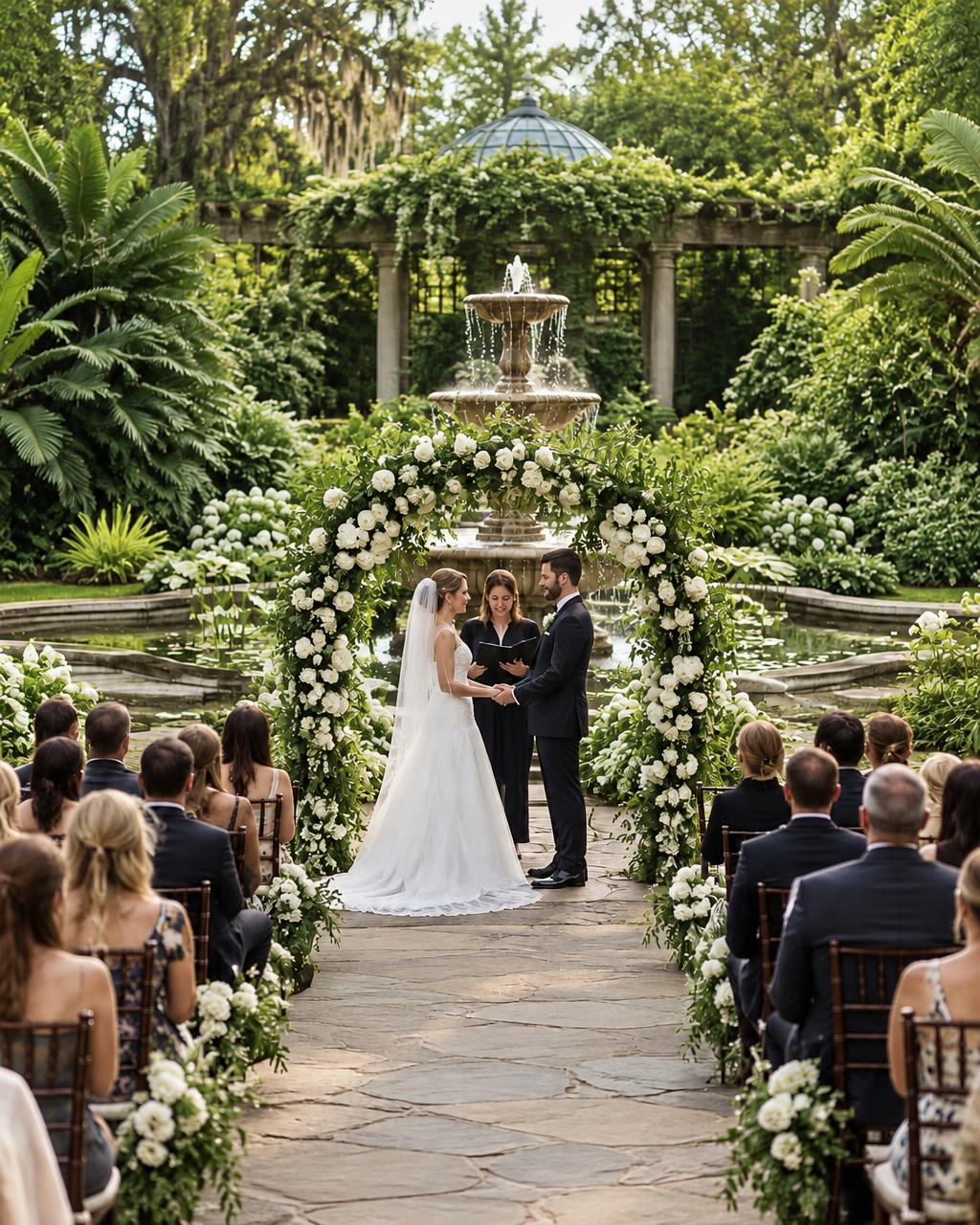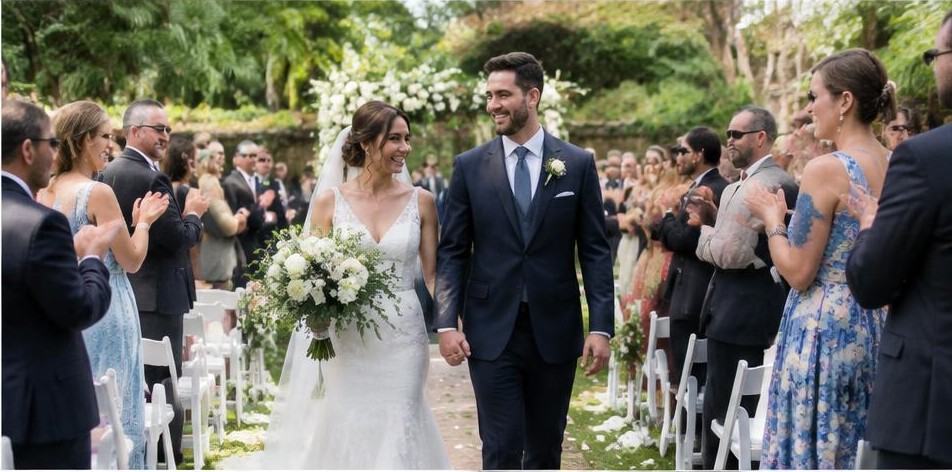
How long is a wedding ceremony? The useful answer comes from your actual ceremony plan, not a borrowed estimate. A short script can take longer than expected when entrances, applause, and movement are included. A ceremony with several readings may flow smoothly when every participant knows where to stand and when to begin. Build your timeline around what you intend to do.
Start with a sequence approved by your officiant, then attach time to each part. For religious or cultural ceremonies, ask your officiant or community which elements, transitions, and expectations should guide the schedule. There is no single order that fits every celebration, and an online outline should not override your ceremony’s meaning.
These twelve steps help turn that sequence into a workable schedule. Use a shared document with columns for each element, its measured duration, its start cue, and the person responsible. Update it as decisions become final.
Tip 01
Time the Script Out Loud
Ask your officiant for the working ceremony script, including welcomes, introductions, transitions, and closing words. Read it aloud at a comfortable speaking pace while someone runs a stopwatch. Silent reading hides the time needed for breathing and emphasis. Record the result beside the script version so later edits do not leave you using an outdated duration.
Mark spoken material separately from actions. A line such as “please exchange rings” may take seconds to say, but finding the rings and placing them takes additional time. During the first read-through, identify these gaps rather than pretending the script captures everything. Then time the actions during rehearsal and add them to your draft.
Tip 02
Measure Entrances from the Actual Starting Point
List everyone entering, their order, whether they walk individually or together, and where each person waits. Measure the route from that waiting point, not just the visible aisle. At a Central Florida garden ceremony, for example, an entrance might begin beyond a doorway or path before guests can see the person approaching.
Walk the route at the pace you actually want, then test spacing between entrances. Include time for the last person to reach their place, any greeting or escort handoff, and everyone settling before the officiant speaks. If the route is unavailable until rehearsal, mark your entrance duration as provisional instead of building a rigid schedule around a guess.
Tip 03
Give Every Reading Its Complete Time
Request the exact text of each reading, not just its title or a link to a longer work. Ask readers to practice aloud using the version they will bring. Time the introduction, the reading itself, and any intended response. A meaningful excerpt is easier to schedule than a selection whose boundaries remain undecided until the ceremony.
Include the reader’s journey from their seat to the speaking position and back. Decide whether two readers will come forward together or separately, and tell them who gives their cue. If someone is reading in more than one language, time the full planned delivery rather than assuming the translated portion will fit inside the original estimate.
Tip 04
Set Vow Expectations Before Finalizing the Schedule
Decide whether you will use personal vows, repeat-after-me vows, shared responses, or a combination. Each creates a different rhythm. For personal vows, agree on a broad length expectation together, then practice privately with a timer. If you want the words to remain a surprise, share only your measured durations with the officiant or timeline coordinator.
For repeat-after-me vows, measure both the officiant’s prompt and each person’s response. Include room to look at one another, take a breath, or recover after getting emotional. Confirm where vow books will be kept and who hands them over. A beautiful vow section should not depend on someone searching pockets while the schedule keeps moving.
Tip 05
Map Rituals as Actions, Not Labels
Writing “unity ritual” in the timeline does not reveal how long it will take. Break the chosen element into its actual steps: an explanation, moving into position, receiving objects, participating, and returning. Ask your officiant or relevant community representative to guide religious or cultural sequences, including any responses or repetitions that belong within them.
Name the person responsible for placing and presenting each item. If family members participate, confirm whether they approach together, take turns, or remain seated. Rehearse movement with stand-in objects when appropriate. Avoid shortening a meaningful practice simply to meet an arbitrary ceremony length; instead, revise surrounding choices after you understand what the practice genuinely requires.
Tip 06
Assign Music a Beginning and an Ending
For every musical selection, identify what it accompanies and what makes it stop. Will the entrance music finish when the last person arrives, continue through a chosen phrase, or play in full? Give the musician or music operator that instruction. A song’s listed runtime is not automatically the duration of the ceremony moment it supports.
Distinguish background music from a featured performance that guests will hear without another activity happening. If you want an instrumental interlude after the vows, reserve its own space in the schedule. Also specify the recessional cue: the closing announcement, the first movement down the aisle, or another agreed moment. Unclear cues can create unnecessary silence or overlap.
Tip 07
Leave Room for Human Pauses
A ceremony is not a continuous voice recording. Guests may laugh at a welcome, applaud after an announcement, or take a moment to respond when invited. Mark likely pauses directly in the script. Ask the officiant where they naturally wait so you can distinguish intentional breathing room from an accidental gap caused by missing instructions.
During a timed run-through, resist rushing past emotional moments just because you already know the words. Practice opening the vow book, making eye contact, and allowing a response before continuing. Add small allowances where the actual ceremony needs them rather than attaching an unexplained block of extra time that nobody knows how to use.
Tip 08
Separate Guest Arrival from Ceremony Runtime
Define what your stated ceremony time means, then keep guest communication consistent with it. If you provide a separate arrival time, label it clearly rather than relying on people to infer an earlier deadline. In your internal schedule, give seating and the processional separate entries so a guest arrival period is not mistaken for the ceremony itself.
Plan how guests will find seats and who will help anyone needing more time along the route. Ask the venue about its preferred approach to late arrivals, then assign a person to manage that process. In an outdoor setting, discuss where guests wait before seating opens. These decisions reduce last-minute interruptions without treating your guests as a timing problem.
Tip 09
Work Backward from Venue Restrictions
Ask the venue for the specific boundaries affecting your ceremony: access time, seating availability, sound restrictions, required finish time, and any reset or departure deadline. Put confirmed requirements into the timeline before choosing optional additions. A ceremony space being available at a particular hour does not necessarily mean everyone can arrive then and immediately begin setup.
For a Central Florida outdoor ceremony, also ask how a weather-related location change would affect the schedule. Identify who communicates the decision and whether the alternate route changes entrances or seating. Coordinate those details with the venue and your vendors; do not assume the original timing transfers unchanged. Keep the alternate sequence beside the primary one for easy reference.
Tip 10
Use Rehearsal to Test Transitions
Rehearsal is especially valuable for the spaces between spoken sections. Practice the entrance spacing, reader movement, ring handoff, ritual positioning, and recessional. Have one person record durations while another calls cues. You do not need to disclose personal vows to test the sequence; reserve their measured time while rehearsing the movements immediately before and after them.
Note where people hesitate and fix the instruction, not merely the estimate. “Walk when the person ahead reaches the front row” is more usable than “follow after a bit.” After rehearsal, update the shared timeline and send the revised version to everyone who controls a cue. Remove superseded copies so participants are not following different plans.
Tip 11
Choose an Overrun Plan Before You Need It
Build your working duration by adding measured speech, movement, music, and planned pauses. Then place a clearly labeled buffer between the ceremony’s expected finish and the next fixed commitment. Size that buffer around the uncertainties you actually have, such as an untested entrance route or several participants moving between seats, rather than borrowing someone else’s blanket recommendation.
Agree with your officiant on what, if anything, could be shortened if the start slips. An optional welcome addition might be adjustable; a required religious element may not be. Never assume a meaningful section can be cut without discussion. Name who makes timing decisions and how they communicate discreetly, so multiple people do not issue conflicting directions.
Tip 12
Fit the Entire Ceremony Inside the Coverage Window
Compare the filming coverage window with the whole ceremony sequence, not just the officiant’s speaking time. Confirm how the agreed start and end align with entrances, vows, rituals, and the recessional. Ask what happens if the ceremony begins late rather than assuming coverage shifts automatically. Keep setup and access questions separate from the time allocated to filming.
For Our Vows on Film, Elopement (couples only, no guests) includes up to 15 minutes of coverage, Essential (intimate weddings with 10 guests or fewer) includes up to 30 minutes and Signature includes up to 60 minutes; Heirloom includes 120 minutes. Those are coverage windows, not recommended ceremony lengths. The service is ceremony-only, so do not build the plan around full-day filming or extra locations. Share your measured sequence and venue constraints, then confirm the coverage boundaries in the agreement.
Bring Your Ceremony Plan Together
Your wedding ceremony length becomes clearer when every choice has a place in the sequence. The goal is not to reach a supposedly perfect number. It is to give your words, people, and traditions enough room while respecting the boundaries of your venue and coverage. A measured plan also shows where an addition will affect the day before you commit to it.
Next, gather the current script, exact readings, vow durations, music cues, and venue requirements in one document. Ask your officiant to review the order, then schedule a timed read-through and movement check. Finish by sharing one updated timeline that identifies cues, responsible people, the expected finish, and the buffer before your next fixed commitment.
Explore my wedding ceremony videos, compare ceremony collections, or check your wedding date. Every collection can be booked up to 12 months ahead; couples planning further ahead can join the waitlist without reserving a date.