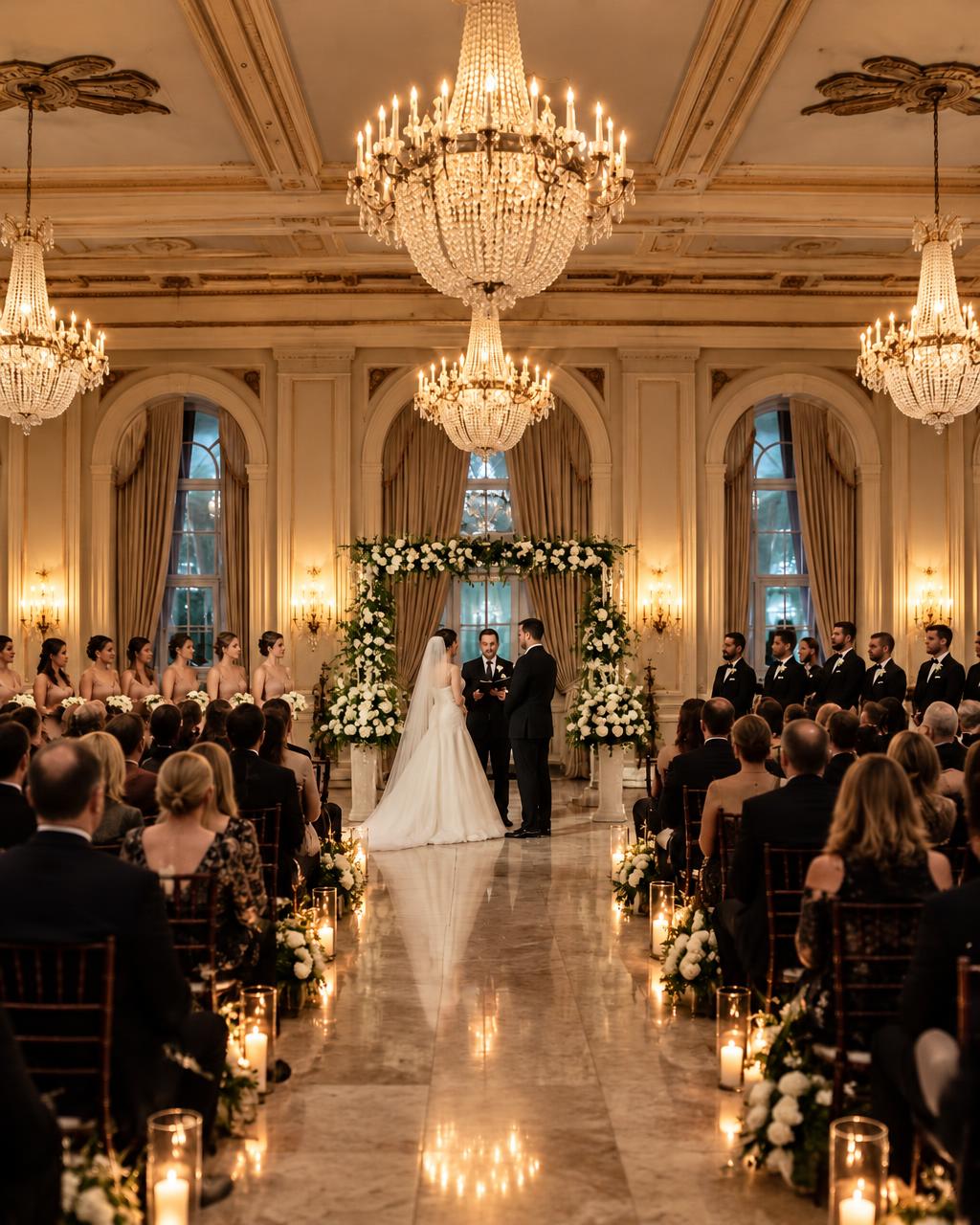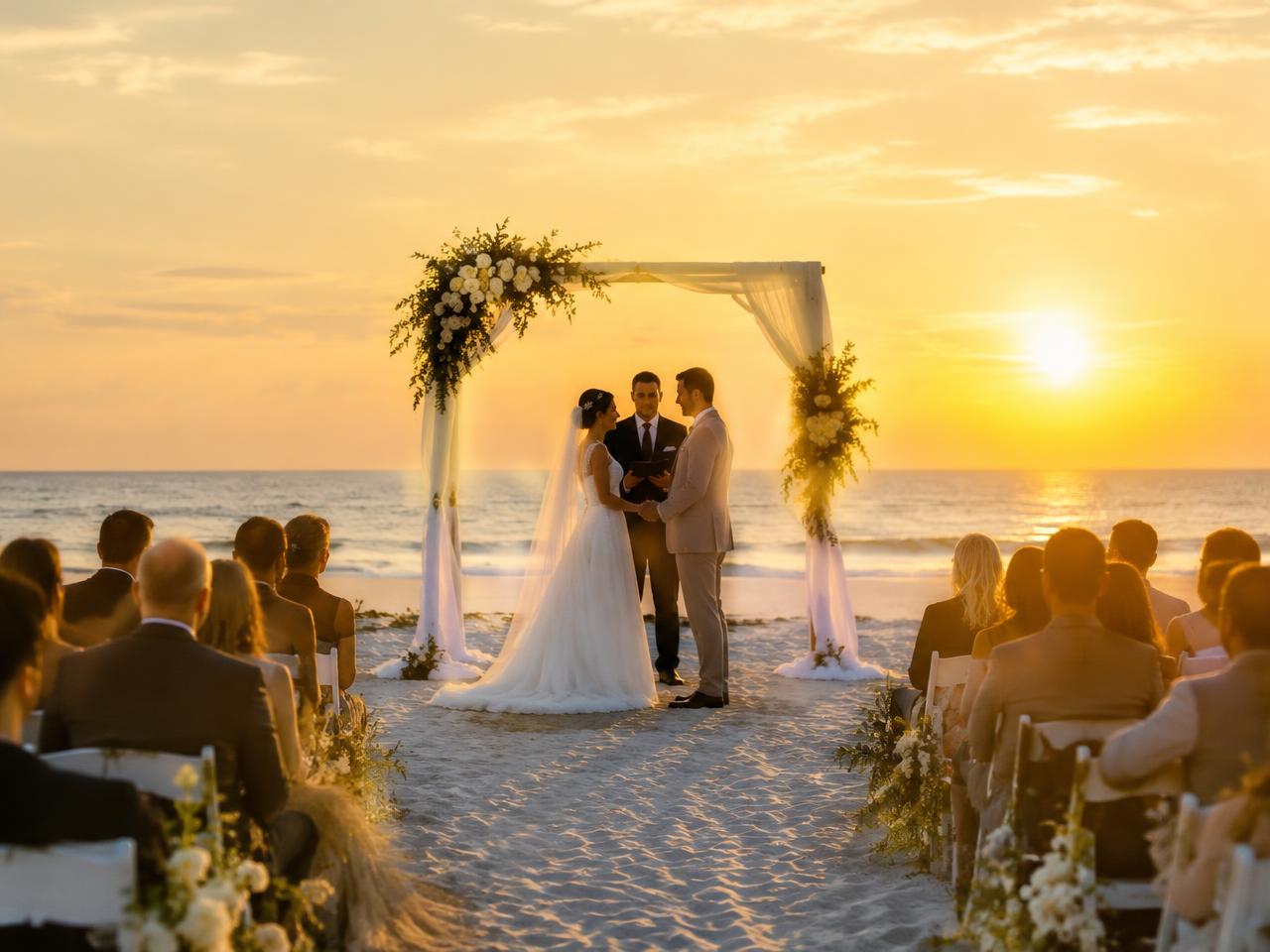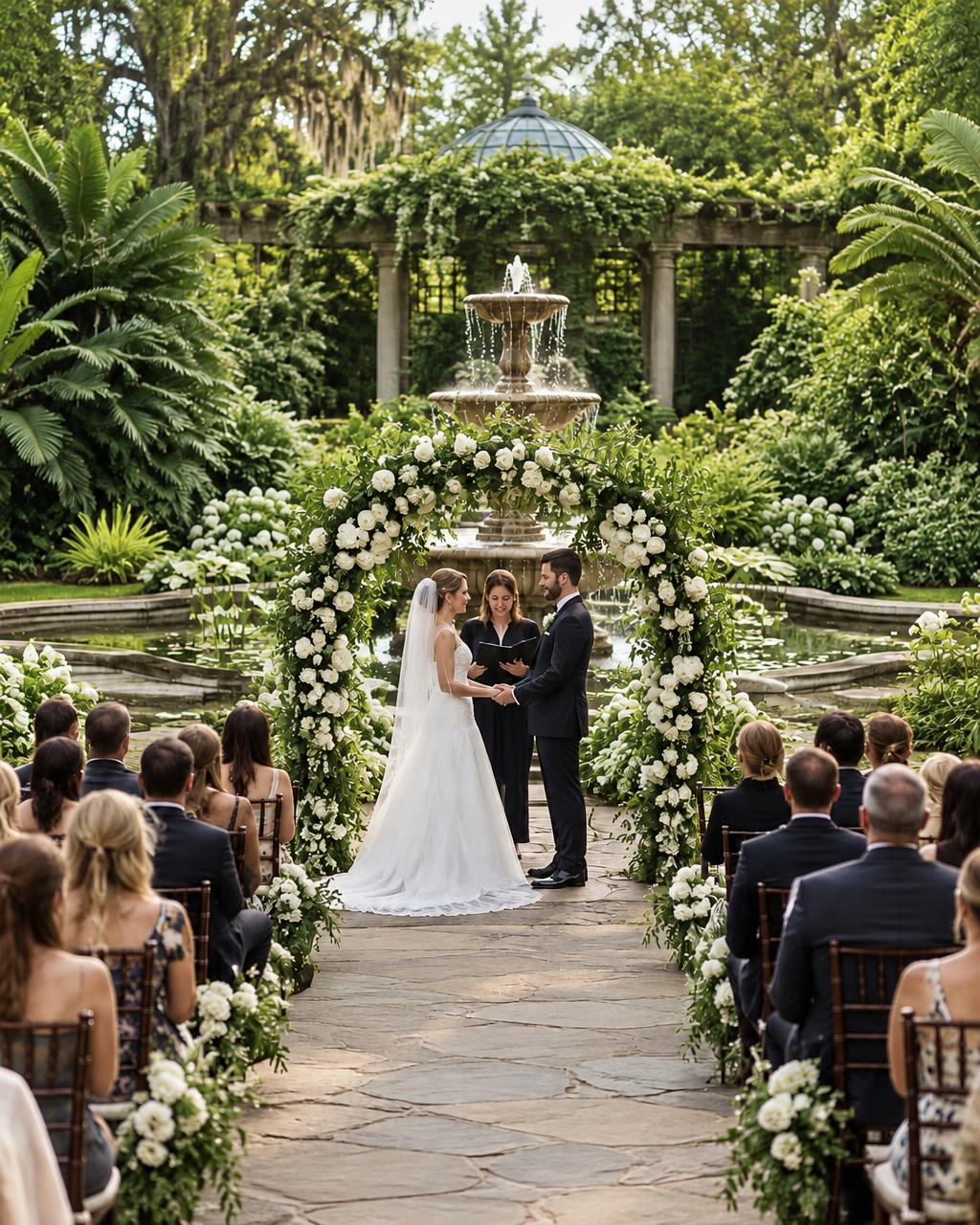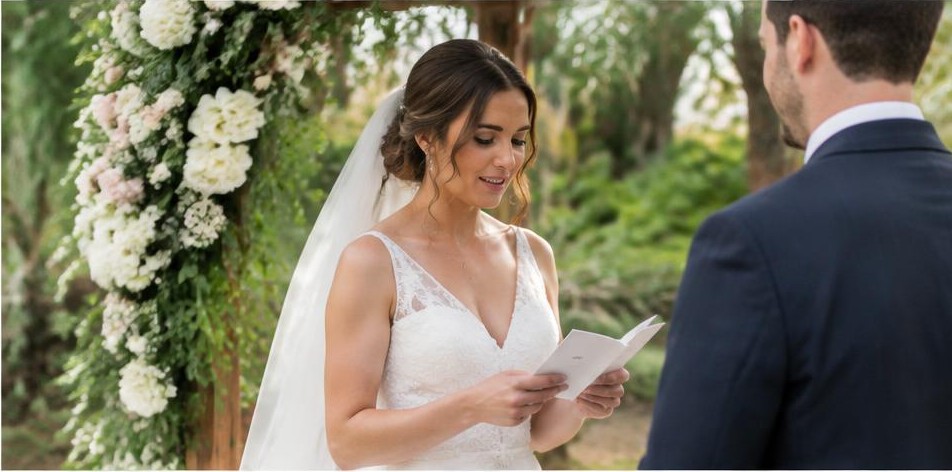
A wedding ceremony planning checklist should do more than remind you to choose music and write vows. It should explain who makes each decision, how people know when to move, and what happens when the setting changes. Those details connect: your guest count affects the seating layout, the layout affects sightlines, and the processional needs both a clear route and someone ready to give the first cue.
Use these 15 checks to build one workable ceremony plan rather than a collection of separate vendor notes. Start with the decisions that shape everything else, then move toward the instructions people will use on the day. For a Central Florida wedding, pay particular attention to outdoor conditions, site access, and the transition to a weather backup. You do not need to script every emotion. You do need to make practical decisions visible so your ceremony can feel personal without leaving participants guessing.
Tip 01
Define the ceremony scope
Write down exactly what belongs to your ceremony plan: guest arrival, seating, the processional, spoken elements, any traditions, and the recessional. Identify where that plan ends. For example, decide whether a receiving line is part of the ceremony departure or a separate activity managed by someone else.
Then compare that scope with each professional’s responsibilities. Ceremony-only videography is not full-day coverage, so do not assume preparations, portraits elsewhere, or reception events are included. List your essential ceremony moments first, then confirm that setup access and the planned coverage window fit the actual service agreement.
Tip 02
Confirm the officiant’s role and preparation process
Ask your officiant what they need from you, when they need it, and which parts of the ceremony you can review together. Discuss names, pronunciation, tone, personal stories, and any subjects you would prefer to leave out. Assign a date for submitting vows or ceremony responses if requested.
Clarify whether the officiant will lead the rehearsal, cue readers, invite guests to stand, and announce the recessional. Religious and cultural sequences vary, so follow your officiant’s or community’s guidance rather than imposing a generic template. Record any required elements before choosing optional readings or arranging the music.
Tip 03
Check the ceremony site as a working space
Review the exact ceremony area, not just the venue’s name or a favorite photograph. Identify the entrance guests will use, where the couple will stand, the processional starting point, and where participants go afterward. Ask which furnishings are included and who places chairs, tables, or ceremony decor.
Get the venue’s rules for equipment placement, sound, decorations, and setup access in writing where possible. Confirm whether another event or venue activity affects your preparation window. If the ceremony moves indoors, inspect that specific room too; an available room is not automatically a fully planned ceremony setup.
Tip 04
Turn the guest count into a seating plan
Use the number of people expected at the ceremony, which may differ from the reception total. Include children and anyone attending only this portion of the day. Decide how many seats to reserve for immediate family and how those seats will be marked without requiring guests to ask.
Ask guests privately about seating or access preferences instead of assuming what they need. Account for companions when arranging accessible spaces with the venue. Give ushers a simple seating diagram, including late-arrival options, and decide whether empty reserved seats can be offered to others once the ceremony begins.
Tip 05
Build a flexible ceremony sequence
Create an ordered list of ceremony elements before writing a minute-by-minute schedule. A starting outline might include the entrance, welcome, reading, vows, rings, closing words, and exit. Treat that as a discussion tool, not a universal rule; your officiant or tradition may call for a different structure.
Check every transition for something that must move or change hands. Who brings the rings forward? Does a reader return to their seat before the vows begin? If you include a symbolic ritual, list its materials and placement. Remove elements that feel obligatory but do not support your ceremony.
Tip 06
Build timing around the actual ceremony
Distinguish the invitation time, guest seating time, processional start, and expected finish. Those are separate milestones, even when they sit close together. Estimate spoken sections by reading them aloud at a comfortable pace, including pauses, rather than judging their length from how much space they occupy on paper.
Add time for entrances, applause, transitions, and any ritual that requires movement. Share the resulting estimate with your venue and ceremony professionals, then check it against access and coverage windows. Avoid planning important moments at the very edge of a booked window without discussing how timing changes are handled.
Tip 07
Assign clear cues to specific people
For every meaningful start or transition, name one person who gives the cue and one person who receives it. That includes opening the processional, changing entrance music, inviting a reader forward, and starting the recessional. Avoid instructions such as everyone will know when it is time to begin.
Use observable cues: the coordinator signals the musician after the officiant confirms readiness, or the reader approaches after being introduced by name. Put these instructions beside the relevant ceremony element. Also agree on how to pause an entrance if someone is not ready, without relying on shouted corrections.
Tip 08
Prepare readings for delivery, not just selection
Give each reader the final text, their place in the sequence, and a pronunciation guide for unfamiliar names or words. Ask them to practice aloud and report the approximate length. Confirm the selection with your officiant, especially when the ceremony follows religious or cultural expectations about readings.
Prepare a readable printed copy with generous spacing rather than assuming a phone will be convenient. Explain where the reader waits, where they speak, and who adjusts or provides the microphone. Keep a duplicate with the ceremony materials, and agree on an alternate plan if the reader cannot participate.
Tip 09
Coordinate audio for guests and the recording
Separate two questions: can guests hear the ceremony, and can the ceremony be recorded clearly? A room’s speakers address the first question, but recording needs should be discussed with your videographer. Tell everyone providing audio about personal vows, multiple readers, live music, and any change in speaking position.
Ask the responsible professionals to coordinate microphone arrangements, sound checks, and placement with the officiant and venue. Do not assume one microphone covers every participant or that a speaker system automatically provides a recording feed. Keep the ceremony plan current so an added reading does not become an unplanned audio moment.
Tip 10
Review sightlines from seats and camera positions
Look at the ceremony setup from the back row, both sides, and any reserved seating areas. Tall floral arrangements, signs, columns, and standing attendants can obscure faces or important gestures. Review decor placement before installation rather than discovering during the entrance that an arrangement blocks the view.
Ask your photographer and videographer to coordinate their working positions with the venue and each other. Keep guest routes distinct from agreed equipment areas. If you want an unplugged ceremony, decide who communicates that request and when, so guests hear it before raising phones during the processional.
Tip 11
Make the weather backup a complete second plan
For an outdoor Central Florida ceremony, identify the person who decides whether to use the backup location and the venue’s decision deadline. Discuss rain, heat, and other weather-related venue procedures with the venue team. Follow their direction rather than building your own technical thresholds or improvised shelter plan.
Map the backup’s seating, entrance route, ceremony positions, audio arrangements, and guest communication. Assign someone to relay the decision to every participating professional and family helper. Ask what must be moved and who handles it; a backup plan is incomplete if everyone knows the room but nobody owns the transition.
Tip 12
Confirm access for guests, participants, and professionals
Trace the route from parking or drop-off to the ceremony seats, including check-in points and any venue-managed transportation. Ask the venue about suitable routes for guests with mobility needs and how to communicate them clearly. Include the location of nearby restrooms in information given to ushers or greeters.
Separately confirm professional arrival instructions, unloading arrangements, equipment access, and the time the ceremony space becomes available. A guest entrance may not be the correct setup entrance. Share any gate instructions or on-site check-in requirements directly with the people who need them, rather than burying them in a broad group message.
Tip 13
Use the rehearsal to test movement and handoffs
Rehearse where people start, how they enter, where they stand or sit, and how they leave. Include readers, ring holders, and anyone helping children participate when practical. Follow the officiant’s or community’s direction for ceremonial actions, and avoid turning the rehearsal into a debate over unfinished choices.
Practice the awkward little exchanges: passing a bouquet, retrieving rings, approaching a microphone, and returning to a seat. Confirm who helps anyone who needs guidance. If the actual space is unavailable, use a simple diagram and an approximate layout, then give absent participants a short written summary afterward.
Tip 14
Create a contact list with decision owners
List the day-of contact for the venue, officiant, coordination, music or sound, photography, and videography, plus one designated family contact. Include names, roles, and preferred day-of phone numbers. Ask each professional which contact should receive schedule updates rather than assuming the person who handled booking will be present.
Beside each likely issue, name its decision owner: weather relocation, late guest seating, missing ceremony materials, or a delayed participant. Choose a contact other than the couple for routine questions wherever possible. Share personal contact details only with the people who need them to carry out the ceremony plan.
Tip 15
Issue one final ceremony brief
Bring the approved details into a short, clearly dated brief: location, access times, ceremony start, sequence, cues, participant names, seating notes, weather backup, and contacts. Attach a layout when it resolves questions more quickly than text. Keep personal vows or private family information outside the general distribution copy.
Send the brief to everyone with an operational role and ask them to flag conflicts before the wedding day. If something changes, label the revision and identify what changed instead of silently replacing the file. Name one person to maintain the current version so older schedules do not keep circulating.
Bring Your Ceremony Plan Together
The most useful ceremony checklist is the one that becomes shared instructions. Your choices about readings, music, seating, and traditions matter, but so do the connections between them: a reader needs a cue, a microphone needs coordination, and a weather change needs someone authorized to communicate it. Clear ownership keeps small uncertainties from landing with the couple at the ceremony entrance.
For your next planning session, mark each of these 15 details as confirmed, awaiting an answer, or not applicable. Put a person’s name and a follow-up date beside every open item. Start with scope, officiant, and site, since those decisions shape the rest. Then build your final brief from confirmed information rather than relying on scattered messages and assumptions.
Explore my wedding ceremony videos, compare ceremony collections, or check your wedding date. Every collection can be booked up to 12 months ahead; couples planning further ahead can join the waitlist without reserving a date.