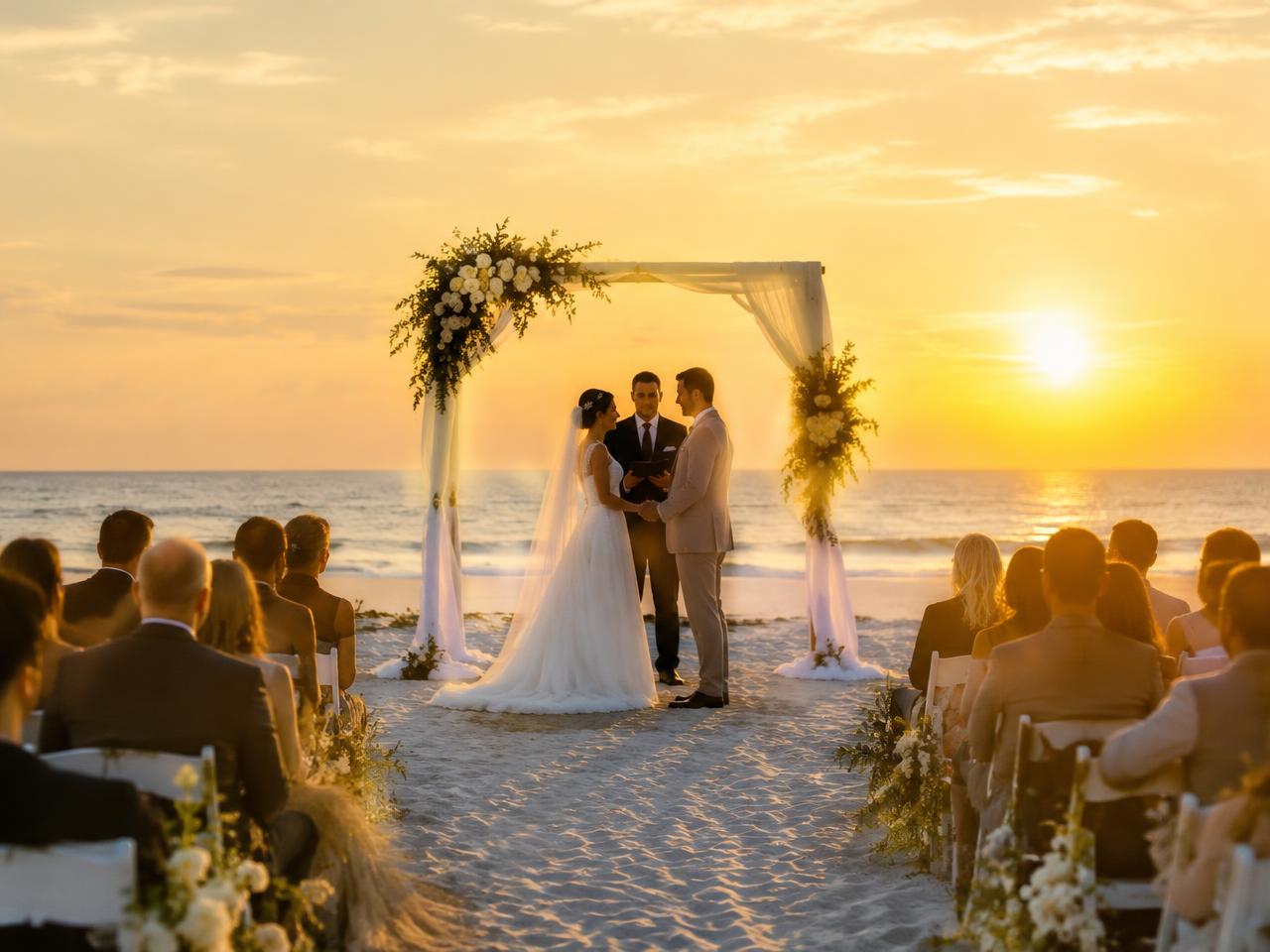
A personal wedding ceremony does not need a surprise performance or a tradition nobody has seen before. It needs choices that sound like you and help your guests understand what you are promising. That might mean a welcome that recognizes your closest people, vows grounded in everyday life, or a familiar song placed where you can actually hear it. The most meaningful details usually have a clear purpose rather than simply filling a space in the ceremony.
Start by separating what matters to you from what you feel expected to include. Then work with your officiant to build a sequence that supports those priorities. Religious and cultural ceremonies may have their own expectations, so ask before moving or adapting an element. These fifteen ideas offer different ways to personalize your wedding ceremony; you do not need all of them. Choose a few that belong together and give each room to land.
Tip 01
Choose the values your ceremony will express
Each of you should privately write down three values you want your marriage to practice, such as generosity, curiosity, steadiness, or hospitality. Compare your lists and choose two or three shared priorities. Give those words to your officiant with a concrete explanation of what they mean in your relationship.
Turn each value into one ceremony decision. Hospitality might shape a welcoming opening; steadiness might become a promise about showing up during difficult weeks. Avoid asking every reading and ritual to express every value. A focused thread feels more personal than repeating a list of virtues throughout the ceremony.
Tip 02
Write a welcome that recognizes the room
Ask your officiant to open with a welcome that reflects who has gathered, not a generic introduction that could fit any wedding. Mention the mix of relatives, longtime friends, and chosen family if that describes your guests. Recognize their presence without ranking people by travel distance or sacrifice.
Include one sentence about why you wanted these people to witness your promises. If guests come from different faiths or backgrounds, the welcome can explain how they are invited to participate. Share that wording with your officiant early so it fits the tone and expectations of the ceremony.
Tip 03
Get names and forms of address right
Prepare a pronunciation sheet for your names, your readers, and anyone the officiant will recognize aloud. Add phonetic spellings or send short voice recordings rather than assuming a familiar spelling makes pronunciation obvious. Include the names you actually use, especially when they differ from names on planning documents.
Decide how you want to be introduced at the end of the ceremony. Do not leave surname changes, titles, or gendered language to assumption. Ask your officiant to read the introduction back to you, and give whoever handles ceremony announcements the same approved wording to prevent mismatched introductions.
Tip 04
Use one everyday memory as an anchor
Choose a small memory that reveals how your relationship works: making dinner after a difficult day, getting lost together, or establishing a Sunday routine. Describe what happened and why it stayed with you. Ordinary moments often give an officiant more useful material than broad statements about being soulmates.
Keep the memory brief enough to support the ceremony rather than become its main event. Explain any detail guests need to understand, and remove inside jokes that require a long backstory. Ask your partner before including anything involving embarrassment, conflict, or another person's private circumstances in a public setting.
Tip 05
Write original vows around promises you can practice
Build your vows in three parts: what you appreciate, what you have learned together, and what you promise. Make the promises observable. Instead of promising endless adventure alone, describe making time to explore together or staying curious about your partner's changing interests. Let affection lead toward commitment.
Agree on an approximate length and level of humor before writing separately. You can preserve the surprise while sharing those boundaries. Read your draft aloud, replace phrases you would never naturally say, and mark places to breathe. Bring a readable copy rather than relying entirely on memorization.
Tip 06
Choose a reader for the meaning, not the vacancy
Select a reader because their presence adds something to the words, not because you need another wedding role. A sibling might suit a passage about growing together; a close friend might bring warmth to a reflection on companionship. Ask privately and make declining a genuinely comfortable option.
Give the reader the complete selection, a pronunciation guide if needed, and clear instructions about when to approach. Ask them to practice aloud at a relaxed pace. Confirm with your officiant who introduces them and where they stand, so their contribution feels connected rather than dropped into the sequence.
Tip 07
Explore cultural traditions through conversation
If a cultural or religious tradition matters to you, begin with someone knowledgeable within that community. Ask about its meaning, who ordinarily participates, and whether adaptations are appropriate. Family familiarity can be a useful starting point, but it does not automatically answer every question about context or participation.
Discuss possibilities with your officiant before choosing objects, wording, or placement. Where appropriate, offer guests a brief explanation approved by the people guiding you. If a practice is not yours to adapt, express the underlying value another way instead of borrowing its appearance without understanding its significance.
Tip 08
Give family roles that fit real relationships
Think beyond a single expected family arrangement when deciding entrances, acknowledgments, and participation. You might walk together, invite two supportive people to accompany you, or recognize chosen family in the welcome. Choose roles based on your actual relationships rather than trying to make every household look identical.
Speak individually with anyone receiving a role before circulating the ceremony outline. Explain what the role involves and avoid presenting it as a test of loyalty. When relationships are complicated, a simple, neutral transition may serve everyone better than a public explanation of who is included or absent.
Tip 09
Make language choices guests can follow
Identify which ceremony moments need translation for the people attending. You might offer a bilingual welcome, alternate languages between readings, or provide translated vows in a printed program. Decide whether your priority is full comprehension throughout or meaningful recognition of both languages at selected moments in the ceremony.
Ask a fluent, trusted person to review the wording, especially promises and family terms that automated translation may flatten. Read both versions aloud to understand pacing. Work with your officiant on transitions so guests know when a passage is being translated and when the ceremony is moving forward.
Tip 10
Place meaningful music where it can be heard
Choose music by its role in the ceremony, not only its place on your shared playlist. An entrance song needs an identifiable starting point; a reflective selection needs enough quiet space to register. Listen to the full lyrics before choosing a song associated with a favorite memory.
Tell the musician or person managing playback exactly when each selection begins and ends. Note whether you want an instrumental section, a particular verse, or a gentle fade after everyone arrives. If the words matter deeply, avoid placing that song underneath spoken vows, readings, or an officiant's explanation.
Tip 11
Give a symbolic ritual a clear purpose
Before adding a ritual, finish this sentence together: this action represents our commitment to something specific. If the answer stays vague, reconsider whether you need it. A secular keepsake ritual, such as placing letters in a shared box, can connect directly to intentions you have already expressed.
Write a short explanation and rehearse the physical sequence with the actual items. Decide who brings them forward, where they rest, and what happens afterward. Check venue requirements and ask your officiant about placement. For religious or cultural rituals, follow the guidance of the relevant officiant or community.
Tip 12
Invite guests into a manageable shared moment
Guest participation works best when the request is simple and clearly introduced. Consider one collective response to a question about supporting your marriage, or a brief silent reflection. Tell guests what will happen before asking them to join in, and keep participation optional for anyone who prefers to observe.
Avoid activities that depend on every guest improvising or passing an object across many rows. Those choices can interrupt the flow and put people on the spot. If you want written wishes, collect them before or after the ceremony rather than turning the central promises into a distribution task.
Tip 13
Honor grief without making it public by default
Talk privately about whether and how to acknowledge someone who has died or cannot be present. One partner may want a spoken remembrance while the other prefers a private keepsake. Neither approach measures love. Agree on the level of visibility before asking your officiant to write memorial language.
If you include a remembrance, decide whether names, relationships, or a general acknowledgment feel right. Consider checking with closely affected relatives before sharing sensitive details. A short pause or a meaningful object can carry significance without requiring a story, an explanation of the loss, or a camera-directed moment.
Tip 14
Shape your relationship story around a turning point
Your officiant does not need to recount every milestone from first meeting to proposal. Identify one turning point that shows why you chose marriage: learning to make decisions together, supporting a change, or recognizing a shared vision. Explain what became clearer through that experience, not just what happened.
Give your officiant a short list of details that are welcome and topics that are off limits. Ask to review personal facts even if some wording remains a surprise. Keep the story pointed toward your vows, so guests understand the commitment ahead rather than only the history behind it.
Tip 15
Close with gratitude that looks forward
Decide whether gratitude belongs in the officiant's closing words or in a brief statement you make together. Name the kind of support you appreciate: patient listening, practical help, or examples of lasting care. Specific categories can feel sincere without turning the ceremony into a long list of names.
Connect that gratitude to how you hope to remain part of your community after the wedding. You might acknowledge that marriage grows alongside friendships and family relationships. Keep logistical announcements separate, allowing the emotional closing to land before guests receive instructions about where to go or what happens next.
Bring Your Ceremony Plan Together
Personalizing your wedding ceremony is partly an editing process. A thoughtful welcome, a well-chosen reading, and promises you can recognize in daily life may say more than several unrelated additions. Review your choices for repetition, especially if the same memory appears in the officiant's story, your vows, and a reading introduction. Keep the strongest version and let the other moments contribute something different.
For your next planning conversation, bring your officiant a one-page outline with your shared values, three preferred personal touches, and any private boundaries. Mark who participates and what each person needs to prepare. Then read the sequence aloud together, checking that every addition supports the promises at the center and feels comfortable for the people involved.
Explore my wedding ceremony videos, compare ceremony collections, or check your wedding date. Every collection can be booked up to 12 months ahead; couples planning further ahead can join the waitlist without reserving a date.