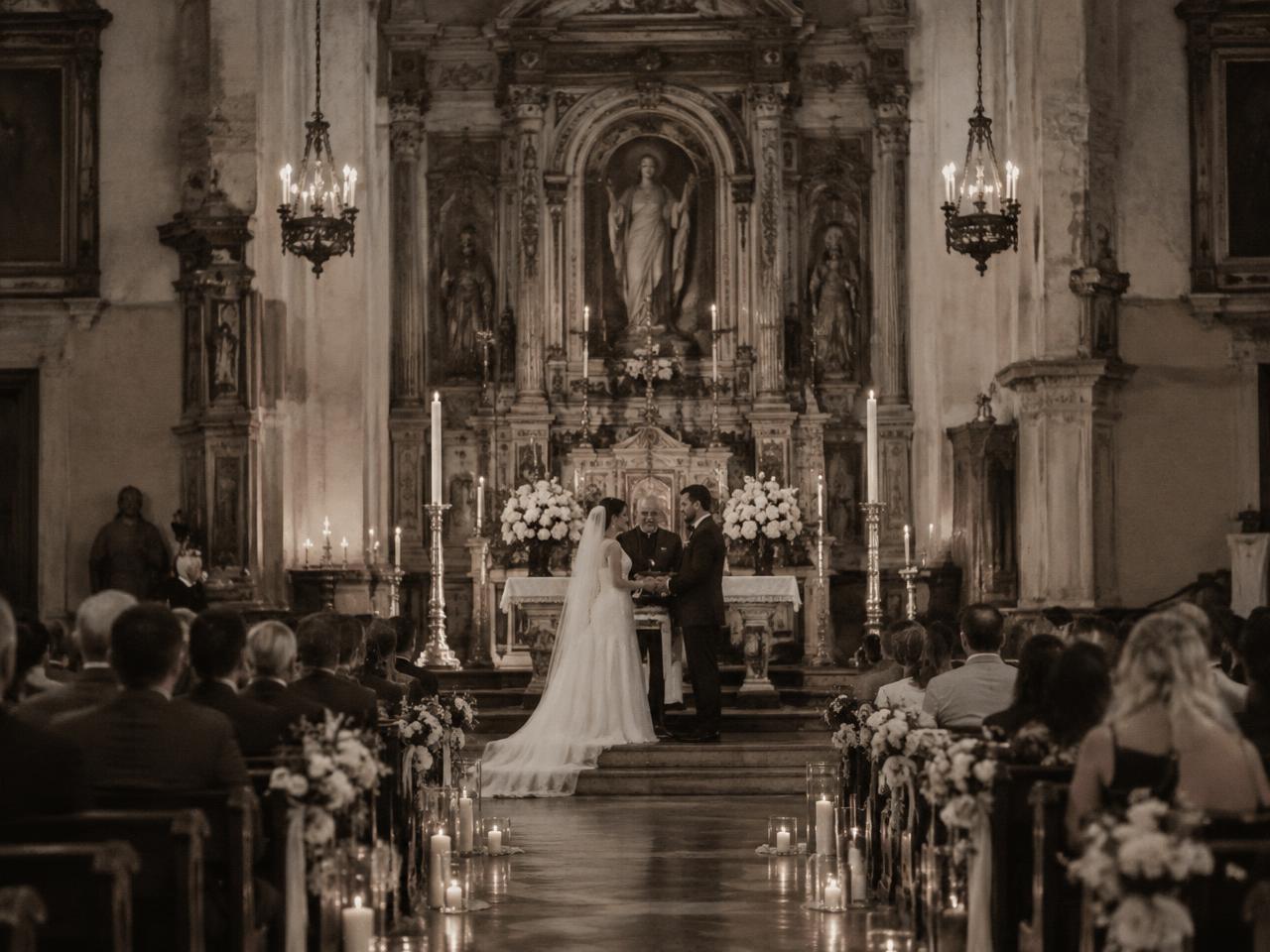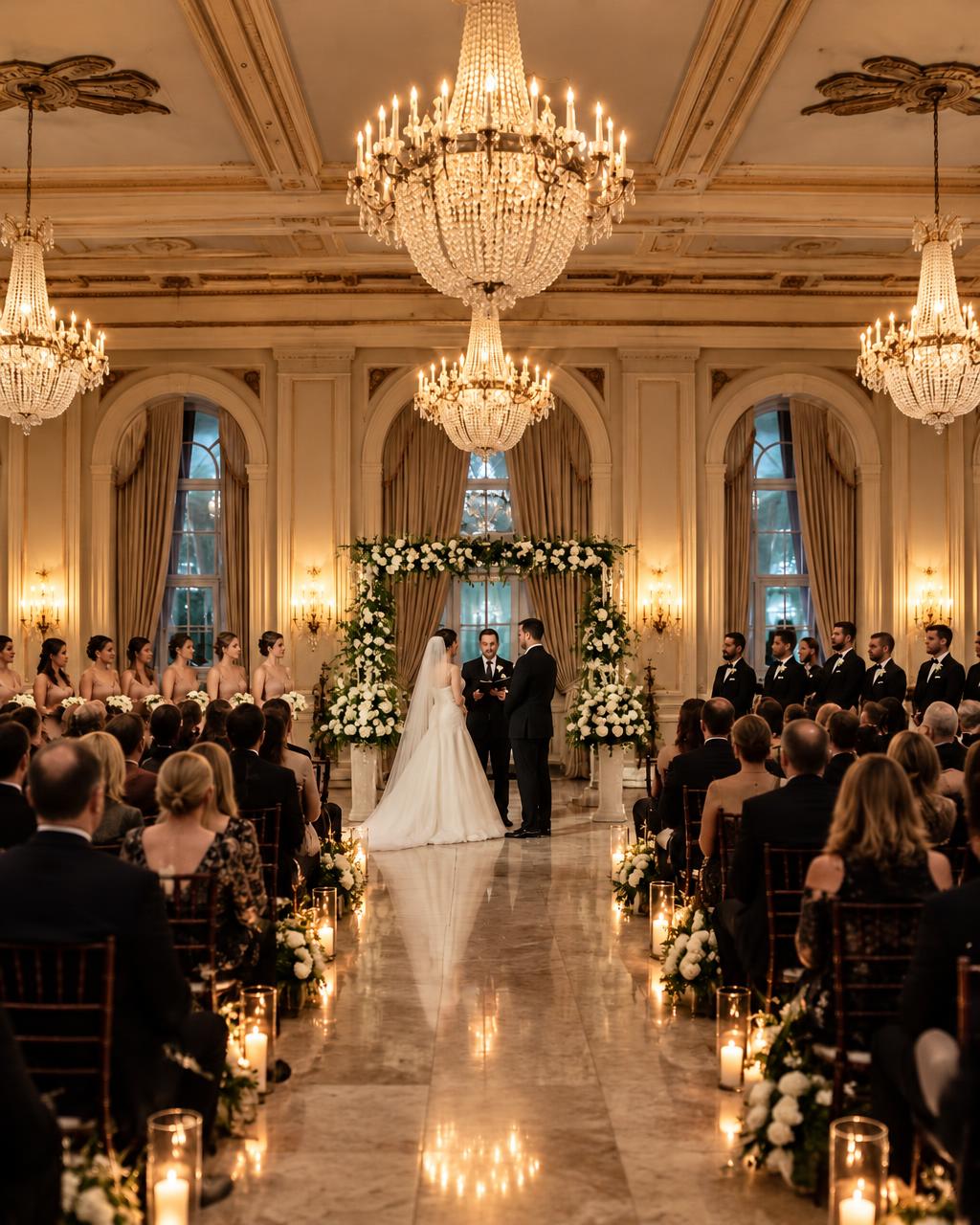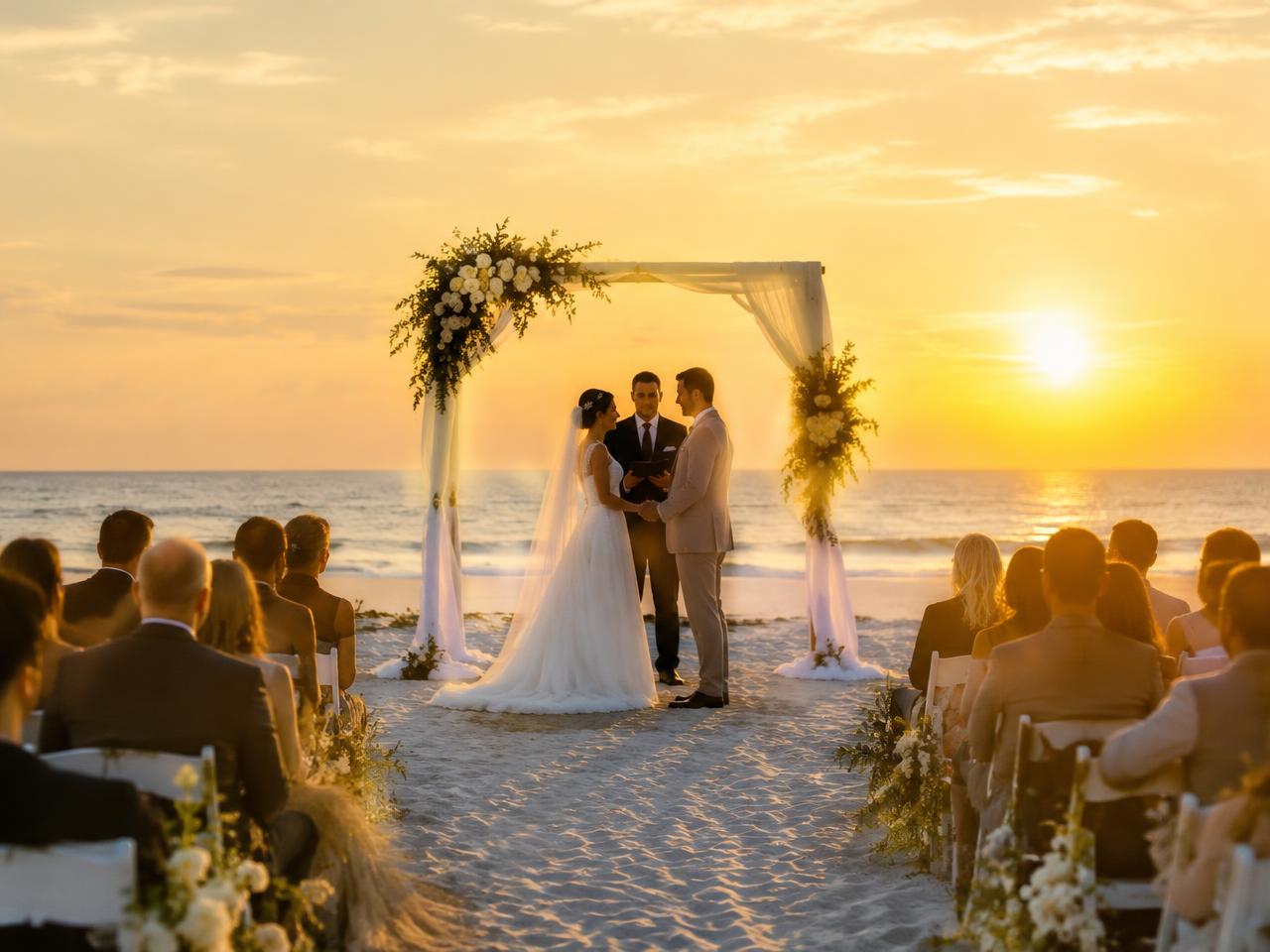
A wedding ceremony rehearsal is most useful when it answers practical questions: Who walks when? Where does everyone stand? Who has the rings? Rather than performing the entire ceremony, use this time to practice the movements, handoffs, and cues that could otherwise leave people guessing. Bring a working ceremony outline, even if a few words are still being edited, and make sure someone is responsible for guiding the group through it.
This wedding ceremony rehearsal checklist covers fifteen things worth practicing, from the entrance route to the weather backup. Start with the people and space, work through the ceremony in order, and finish by checking what changes if conditions shift. Your officiant should guide the ceremony structure, especially when religious or cultural traditions are involved. The goal is not a perfectly choreographed performance. It is a shared understanding that lets everyone participate comfortably without needing whispered instructions during the ceremony itself.
Tip 01
Confirm Who Needs to Attend
Invite everyone with a movement, speaking role, or handoff: the couple, officiant, wedding party, readers, escorts, ring holder, and any adults helping children. Include the person coordinating entrances. Send a clear arrival time and exact meeting point, rather than only the venue address, so nobody waits at the wrong entrance.
If someone cannot attend, assign a stand-in and record their route and position in the ceremony outline. Send the absent participant a short, specific recap afterward: where to gather, whose cue to follow, and where to sit or stand. Avoid relying on another guest to explain everything moments before the procession.
Tip 02
Walk the Actual Entrance and Exit Routes
Start where participants will actually gather, not halfway down the aisle. Walk from that holding area through any doors, corners, or narrow passages to the ceremony space. Identify where each pair forms up and where the entrance coordinator can see both the next participant and the aisle.
Practice the exit route too, including where the couple goes after reaching the aisle’s end. Choose a gathering point that keeps the doorway clear for everyone following. If the rehearsal happens elsewhere, use a simple venue sketch and confirm site access and route details with the venue contact before the wedding.
Tip 03
Run Through the Ceremony Order
Give the officiant and entrance coordinator the same version of the ceremony outline. Walk through each transition in sequence: entrances, welcome, readings, vows, rings, any rituals, closing words, and exit. Your order may differ; religious and cultural ceremonies should follow guidance from the officiant or relevant community.
Instead of reading every passage aloud, announce the section and practice what happens next. For example, after a reading ends, does the reader return to a seat before the officiant continues? Mark these transitions directly on the outline. Remove outdated copies so two helpers do not work from conflicting plans.
Tip 04
Set a Comfortable Walking Pace
Practice walking at a natural, unhurried pace rather than an exaggerated step-and-pause march. Have each person look toward their destination and leave enough space ahead to avoid bunching. Use a visible landmark, such as the aisle midpoint, to establish when the next person or pair begins.
Walk the entrance with the selected music if it is available. Check whether the spacing feels comfortable for the shortest stride in each pair, particularly when an older relative or child is involved. Practice the recessional separately: excitement often speeds up the exit, so agree on who follows the couple and when.
Tip 05
Choose Standing and Sitting Positions
Place the couple and officiant first, then arrange attendants around them. Check that everyone knows their final spot without needing to count people on the wedding day. Use existing visual references, such as an aisle edge or chair row, and ask the venue before adding any temporary floor markers.
Practice turning toward each other for vows and toward guests when appropriate. Decide who receives the bouquet and when it returns. Readers and relatives should also try their assigned seats so their paths remain straightforward. If ceremony filming is planned, share these positions so camera placement can account for the actual arrangement.
Tip 06
Practice Microphone Use and Handoffs
Ask whoever manages ceremony sound to explain which microphones will be used and who handles each transition. Practice speaking a few ordinary sentences at normal volume. If a handheld microphone is involved, have the sound professional demonstrate its placement, then rehearse passing it without also juggling flowers or a reading folder.
Clarify whether readers share a microphone, use a fixed stand, or wait for someone to bring one. If the rehearsal equipment differs from the wedding setup, document the intended arrangement rather than treating the test as final. Give the videography team the sound contact so recording questions reach the right person.
Tip 07
Rehearse Each Reader’s Full Movement
Have every reader practice leaving their seat, reaching the speaking position, opening their text, and returning afterward. Confirm whether the officiant introduces them by name or gives a quieter cue. A reader should not have to guess whether a pause means it is time to stand.
Bring the actual reading format, whether it is a printed page or a booklet. Check that the text is comfortably readable and that pages stay in order. Practice the opening and closing lines, including any response requested by the officiant. Decide where the text goes afterward so it is not left in another participant’s way.
Tip 08
Rehearse the Ring Handoff
Name one person responsible for bringing the rings to the ceremony and identify who holds them during the entrance. Rehearse with substitutes if preferred. Trace the full handoff: from holder to officiant or couple, then onto each partner’s finger according to the agreed ceremony sequence.
If a child carries a decorative box, decide whether it contains the actual rings or substitutes, and tell the responsible adults. Practice opening the container and passing it with both hands available. Choose where the empty box goes immediately afterward. This detail prevents an unnecessary search for a pocket during the exchange.
Tip 09
Practice the Mechanics of Your Vows
You can rehearse vows without revealing their words. Use a few neutral sentences to practice opening vow books, holding a microphone if needed, and looking up at each other. Decide who carries the books into the ceremony and who takes them once both partners have finished.
Ask the officiant how repeat-after-me vows will be divided into phrases, or how personal vows will be introduced. Practice the transition between speakers, including any microphone exchange. If someone becomes emotional, agree that a quiet pause is acceptable; nobody needs to rush in simply because the next line takes a moment.
Tip 10
Match Music to Visible Cues
Create a short cue list showing each music selection, the action that starts it, and the person authorized to give that cue. Separate seating music, processional selections, ritual music, and recessional music. A track title alone does not tell a musician or playback operator when to begin.
Practice any change between entrance songs and confirm what happens if the walk finishes before the music does. For live musicians, ask how they prefer to receive cues and handle transitions. For recorded music, identify the correct version of each selection. Rehearse the exit cue against the officiant’s actual closing sequence.
Tip 11
Walk Through Rituals and Symbolic Actions
For a unity ritual, cultural observance, or other symbolic action, ask the officiant or community representative to guide the sequence. Practice who approaches, who presents each item, and where participants stand. Do not assume an online example matches your tradition or the version you intend to include.
Set out representative objects so you can test the choreography rather than merely describe it. Confirm who prepares the table, brings items forward, and clears or collects them afterward. Ask the venue about any applicable restrictions. If words accompany the action, establish whether the officiant speaks during the movement or waits until everyone is settled.
Tip 12
Account for Clothing and Accessories
Wear the ceremony shoes to rehearsal if practical, or bring a comparable pair that helps you assess walking pace and turns. Consider how a long skirt, train, veil, jacket, or bouquet changes movement. You do not need the full wedding outfit to identify where an extra hand may be useful.
Assign a specific person to arrange the train or hold flowers, and practice when they step forward and return. Check where vow books and ring containers will be carried if clothing has limited pockets. If the ceremony includes sitting, standing, or kneeling, discuss those movements with the officiant and rehearse as appropriate.
Tip 13
Give Children Simple Jobs and an Exit Option
Explain a child’s role in one or two concrete instructions, such as walking to a familiar adult and handing over a basket. Let them see the route before asking for a practice entrance. Place their receiving adult where the child can easily recognize them, rather than expecting them to find someone in a crowd.
Decide whether children remain standing or sit after their entrance, and rehearse that transition. Name an adult who can accompany a hesitant child or quietly help them leave their position. Avoid making the ceremony depend on perfect participation. Tell the entrance coordinator what to do if a child chooses not to walk.
Tip 14
Walk Through the Weather Backup
For a Central Florida outdoor ceremony, review the venue’s weather contingency even when the forecast looks encouraging. Identify who communicates a location change and when the venue needs a decision. Walk the alternate entrance, aisle, and exit if access allows; an indoor room may require different spacing or a different gathering area.
Update more than the seating plan. Confirm where readers wait, where ritual items go, and how musicians, sound providers, and ceremony videographers receive the revised layout. Ask the venue contact to explain its procedures rather than improvising your own. Give participants one clear place to check for instructions if the ceremony location changes.
Tip 15
Confirm Contacts and Wedding-Day Instructions
End rehearsal by naming the person participants should contact with ceremony questions on the wedding day. Share that person’s phone number, the arrival time for each role, and the gathering location. Distinguish the venue contact, officiant, and entrance coordinator so requests reach someone who can actually resolve them.
Have the coordinator recap unresolved items aloud: a missing reading, an unconfirmed music version, or a ring holder’s arrival time. Assign each task an owner and a deadline. Then send one updated ceremony outline to the relevant people. This final check turns rehearsal decisions into usable instructions instead of leaving them scattered across conversations.
Bring Your Ceremony Plan Together
A useful rehearsal ends with fewer unanswered questions, not with everyone memorizing a script. Concentrate on the moments when responsibility changes hands: an escort releases an arm, a reader approaches the microphone, the rings come forward, or the music signals the exit. Those transitions benefit most from a physical walkthrough. If something feels awkward, simplify it with your officiant rather than adding another instruction for everyone to remember.
Before you leave, gather the final changes into one ceremony outline and confirm who will distribute it. Your next planning step is to check that each participant knows their arrival location, cue, and immediate next action. Keep that version accessible to the people guiding the ceremony, including anyone who missed the rehearsal.
Explore my wedding ceremony videos, compare ceremony collections, or check your wedding date. Every collection can be booked up to 12 months ahead; couples planning further ahead can join the waitlist without reserving a date.