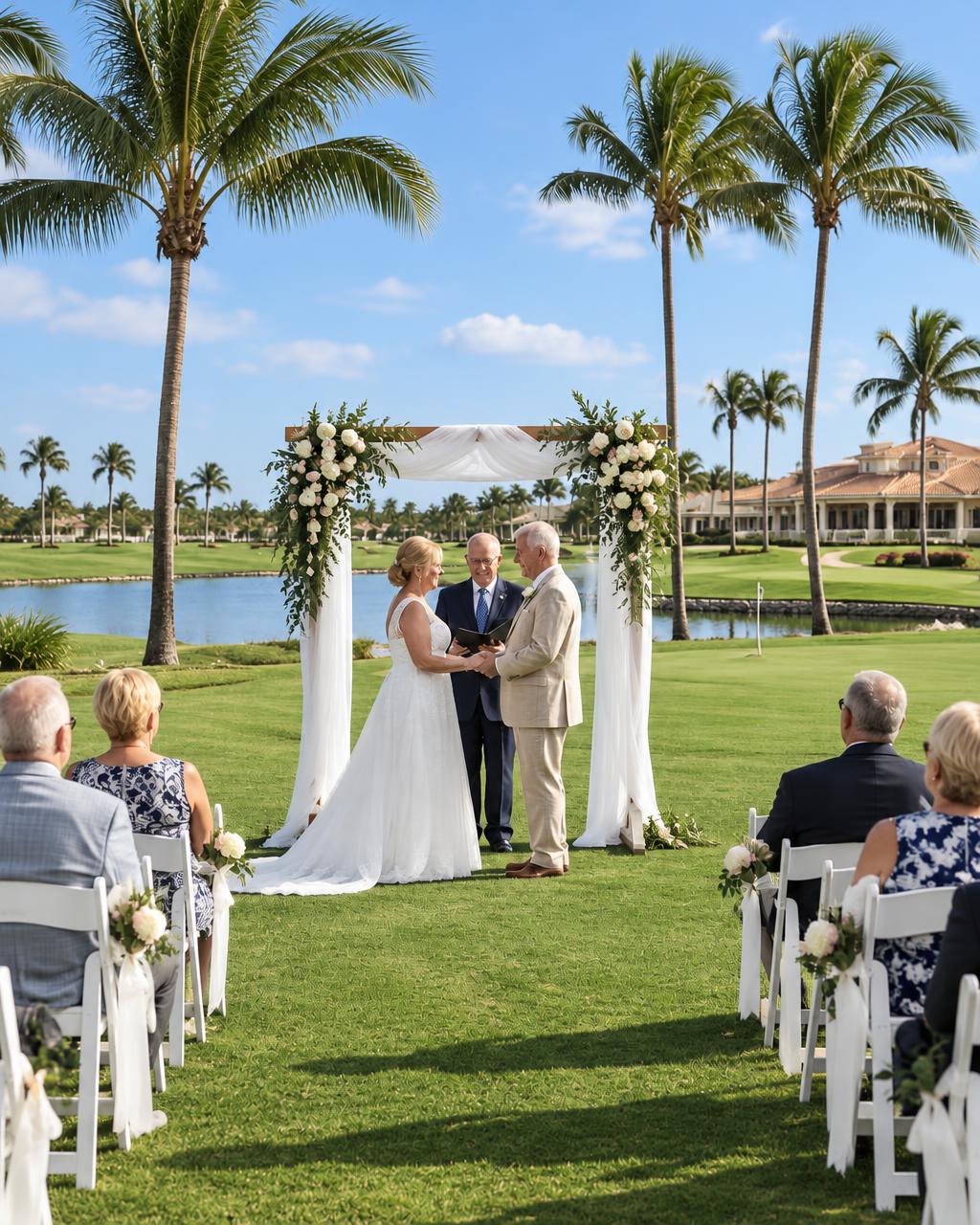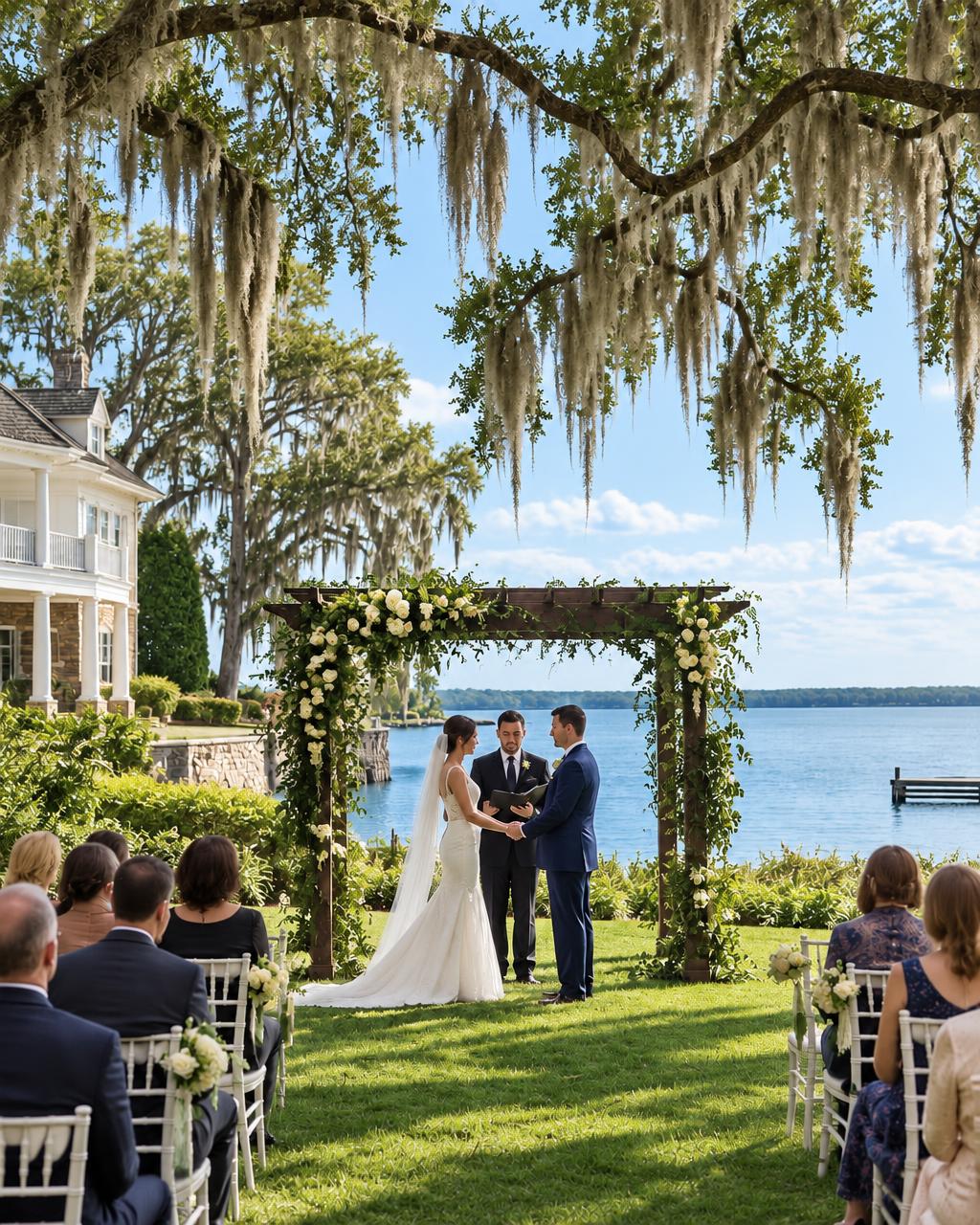
Wedding ceremony seating shapes more than the view of your vows. It affects how guests find their places, whether loved ones can sit together, how comfortably someone can reach a seat, and what happens when everyone leaves. A layout that looks balanced in an empty space may work differently once guests arrive with walkers, wheelchairs, children, handbags, and partners they want beside them. Start with the people attending, then arrange the chairs around the ceremony you are actually planning.
For a Central Florida wedding, also consider how the seating plan translates to your weather backup space. The same guest count may require a different arrangement indoors or under cover. These twelve tips help you turn a floor plan into useful decisions about rows, aisles, family seating, and movement. Confirm the final arrangement with your venue and coordinator, and ask your officiant about any seating considerations specific to your ceremony traditions.
Tip 01
Build Your Seating Count Around Actual People
Start with your expected ceremony attendance, not the reception table count. Identify anyone who will attend only the ceremony, children who need their own chairs, and wedding party members who will sit after entering. Ask your officiant and any readers whether they need seats within the guest arrangement or elsewhere.
Make a short count sheet showing guest chairs, reserved chairs, and wheelchair positions separately so nobody treats an open wheelchair space as a missing chair. Discuss a modest attendance buffer with the venue rather than adding an arbitrary extra row. Update the sheet after final RSVPs and share one clearly dated version.
Tip 02
Confirm Capacity for Your Specific Layout
Ask the venue to confirm your proposed ceremony arrangement at your expected guest count. A general space capacity does not tell you how many chairs fit in the configuration you want alongside an aisle, ceremony focal point, musicians, and filming positions. Request a layout showing those elements together before approving chair placement.
Repeat that conversation for the weather backup location, especially if it has columns, fixed furniture, or a different entrance. Ask what changes when the ceremony moves: fewer chairs per row, a side aisle, or a different processional route. Record who approves the final setup and who communicates any same-day layout change.
Tip 03
Plan the Aisle Around the Processional
List who will walk down the aisle and in what groupings. Two escorts, a parent holding a child's hand, or someone using a mobility aid may move differently from a single attendant. Share those groupings with the venue so the aisle arrangement reflects the actual entrance rather than just a symmetrical drawing.
Review the route with chairs in place whenever possible, including the turn into the aisle and the approach to the front. Ask your florist how arrangements will affect that route without assuming decorations stay within chair edges. Keep the processional entrance recognizable so arriving guests do not gather where the wedding party needs to assemble.
Tip 04
Integrate Wheelchair Seating With Companion Seats
Ask guests privately about seating preferences rather than assuming every wheelchair user wants the front row or an aisle position. Offer choices that include a clear view and space beside a partner, friend, or family member. Confirm the arrangement with the venue using the guest's preferences, without asking for unnecessary medical details.
Mark these positions on the setup plan and explain them to ushers before doors open. An intentionally open space should not become storage for bags, folded chairs, or decorations. Check the route from arrival to the selected position with the venue, including whether the weather backup preserves comparable seating choices and companion placement.
Tip 05
Choose Row Depth With Sightlines in Mind
Avoid deciding between wide rows and many short rows solely from an overhead sketch. Deep seating can put the last guests far from your expressions, while very wide seating can create strong side views. Ask the venue which configurations suit the space, then compare views from the rear center and outermost chairs.
Where the setup allows, consider offsetting chairs so guests are not looking directly at the back of another person's head. Test that idea while seated, not standing above the chairs. Check whether a low arrangement, aisle decoration, or chair-back detail becomes an obstruction at guest eye level, and revise the plan before adding more rows.
Tip 06
Reserve Family Seats Without Creating Guesswork
Discuss family seating privately before printing generic signs for each side. Divorced parents, remarried partners, strained relationships, and chosen family may call for specific places rather than a broad front-row reservation. Ask the people involved what would feel comfortable, then make a decision that does not require negotiation during guest arrival.
Give ushers a discreet map with names and exact seats or row sections. Decide who sits beside each parent and where escorted relatives go after their entrance. If you prefer open seating elsewhere, distinguish those chairs clearly from reserved places. Avoid making guests infer family importance from a confusing collection of partially occupied front rows.
Tip 07
Give Ushers a Seating Plan They Can Use
Brief ushers on more than which side guests should choose. Show them reserved seats, wheelchair positions, companion chairs, the preferred filling order, and the route for late arrivals. Assign someone to greet at the entrance and someone to help near the rows if the space makes communication between those positions difficult.
Agree on a simple response when guests request a different seat: accommodate preferences where possible, but check before using reserved places. Tell ushers whom to contact with an unresolved question. Give them a clear cue for when seating pauses for the processional, and coordinate that cue with the person managing the wedding party's entrance.
Tip 08
Decide Whether Any Guests Will Be Standing
Do not let standing become the accidental overflow plan when chairs run out. If you are considering a standing ceremony, think beyond the length of the vows: guests may also stand during arrival, delays, readings, and announcements. Discuss the idea with your venue, and provide seating choices without requiring guests to justify needing them.
Place seated and standing guests deliberately so one group does not block the other. For ceremonies where guests rise at particular moments, ask the officiant how those cues will be handled and how seated participation can be welcomed. Religious and cultural practices differ, so follow your officiant or community's guidance rather than imposing a universal sequence.
Tip 09
Check Viewing Angles From the Actual Seats
Stand where you expect to exchange vows, then have someone sit at several guest positions: front corner, middle aisle, back row, and far side. Check what each person can actually see. A floral pedestal might frame you beautifully from the center while hiding one partner entirely from a substantial section of guests.
Review where the officiant, wedding party, and readers will stand, since people can block views just as easily as decor. Ask your ceremony videographer about planned camera positions before finalizing nearby chairs. Guest sightlines and filming angles are related but not identical; a clear camera view does not prove every guest has one.
Tip 10
Give Circular Layouts a Clear Orientation
A circular or semicircular ceremony can bring guests closer, but it changes what everyone sees. In a complete circle, some guests will usually see your backs during portions of the ceremony. Decide whether that tradeoff suits your priorities rather than assuming surrounding the couple automatically creates better views from every chair.
Map entry routes, the officiant's position, and the place where readings happen before closing the circle with chairs. Identify how you will enter and leave without squeezing between seated guests. For culturally or religiously significant arrangements, consult your officiant or community. If you want guests mostly facing your expressions, explore an open arc instead.
Tip 11
Trace Access Beyond the Seating Area
Walk through the guest journey from the arrival point to the ceremony entrance, selected seats, restrooms, and the next gathering place. Ask the venue about available routes and assistance arrangements. A thoughtful seating position loses much of its usefulness if a guest reaches it only after confusing directions or an unexpected detour.
Consider guests who may need to step out with a child, take a quiet break, or leave briefly and return. Offer edge seats near an appropriate route without automatically placing everyone with those preferences in the back. For outdoor Central Florida ceremonies, confirm how guests will be directed if weather changes the entrance or seating location.
Tip 12
Plan the Exit Before Filling the Rows
Decide what happens immediately after the recessional: guests remain seated, leave by rows, or follow directions toward another space. Ask your coordinator and venue which approach fits the layout. Make sure the couple's exit route does not end at a bottleneck where guests are already gathering to retrieve belongings or greet relatives.
Coordinate the announcement with your officiant so guests hear the next step before everyone starts moving. If family members need to remain for photographs, identify them clearly rather than holding all guests without explanation. Check that wheelchair users and companions have a practical departure route, and assign someone to direct guests at any confusing junction.
Bring Your Ceremony Plan Together
A useful wedding ceremony seating plan answers three questions: where does each guest belong, what will they be able to see, and how will they move through the space? The best arrangement is not necessarily the most elaborate one. It is the one your venue can set correctly, your ushers can explain easily, and your guests can use without sorting out unclear reservations or blocked views themselves.
Your next step is to annotate one ceremony layout with the current guest count, reserved names, wheelchair and companion positions, aisle routes, and exit direction. Review it with your venue and coordinator, then confirm ceremony-specific needs with your officiant. Prepare the same information for your weather backup so a location change does not erase the thoughtful seating decisions you have already made.
Explore my wedding ceremony videos, compare ceremony collections, or check your wedding date. Every collection can be booked up to 12 months ahead; couples planning further ahead can join the waitlist without reserving a date.