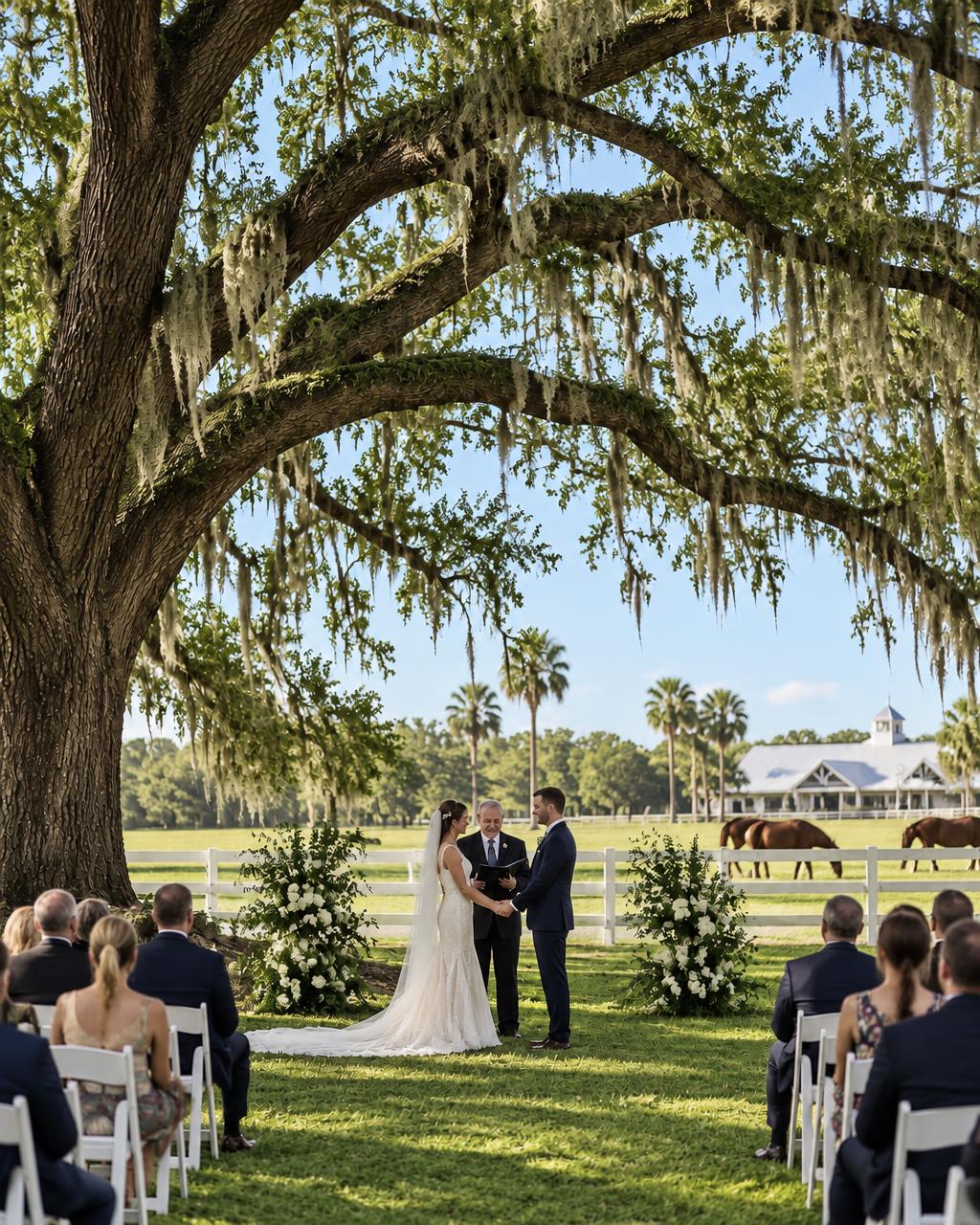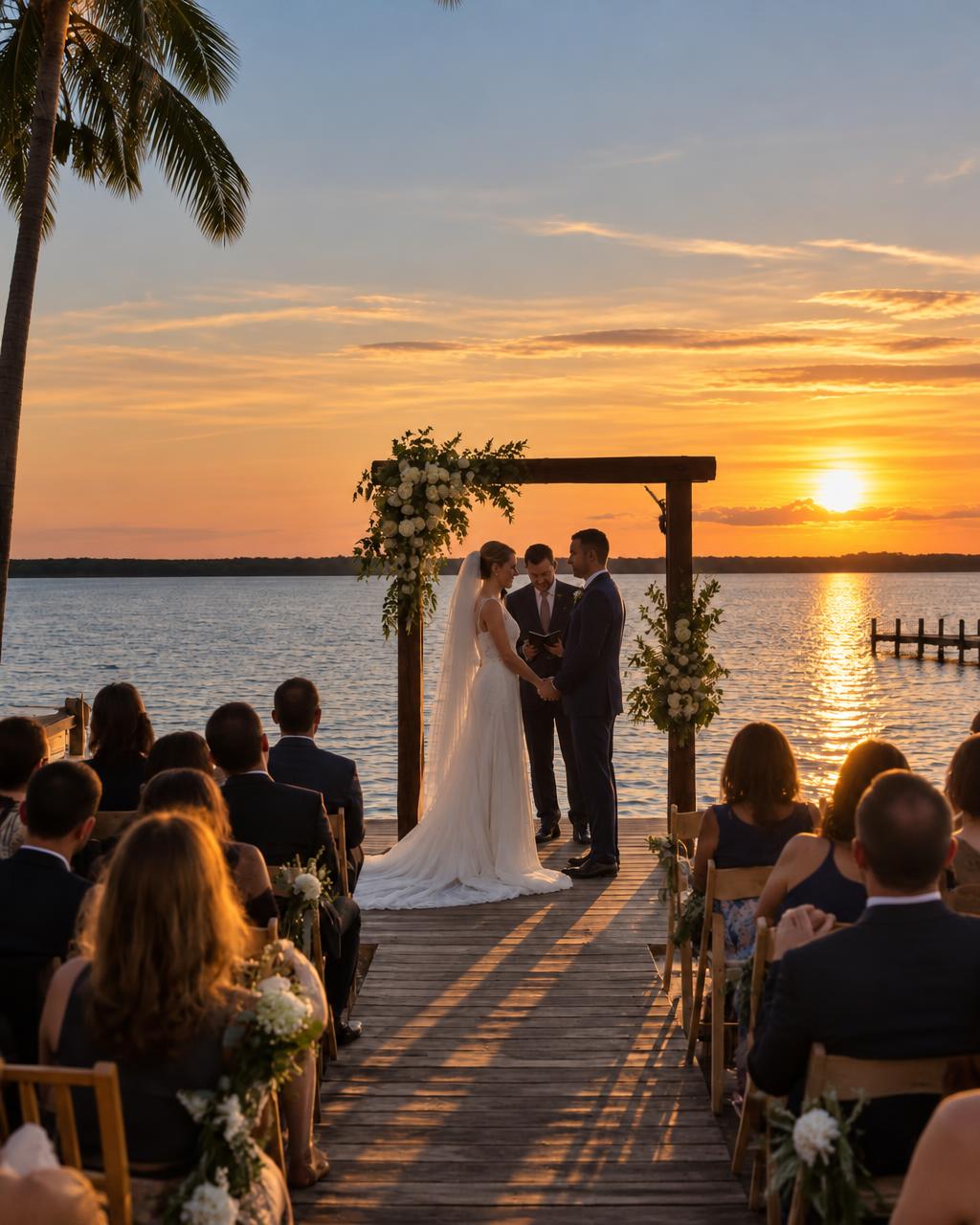
A Florida beach wedding ceremony can feel wonderfully simple: an open horizon, a short aisle, and your favorite people gathered for your vows. The planning behind that simplicity needs to be specific, though. Sand changes how guests arrive and where chairs sit. Wind affects everything from a reading page to the words your partner hears. A beautiful stretch of shoreline is only a starting point, not a complete ceremony plan.
Before choosing décor or setting your invitation time, work through the details of the exact beach entrance and ceremony footprint. Confirm permissions with the authority responsible for that location, ask local contacts about shoreline conditions, and give guests a clear picture of the experience. These fifteen tips focus on making your Florida beach vows comfortable, audible, and organized without turning the setting into something it is not. Start with the location, then build your ceremony decisions around its real conditions.
Tip 01
Verify permissions with the responsible authority
Identify who manages the exact stretch of beach you want to use. A nearby hotel, beach access point, and public shoreline may involve different contacts. Ask the responsible authority what approvals apply to your proposed ceremony, including the guest count, date, chairs, arch, amplified sound, and professional filming.
Request written confirmation of the requirements and keep it with your ceremony documents. Ask who handles questions on the day and whether approval covers setup and removal time. Do not treat a vendor listing, social media photograph, or another couple’s ceremony as proof that your own arrangement is permitted.
Tip 02
Make wind part of the ceremony design
Choose ceremony details that remain manageable when the breeze picks up. A vow booklet is easier to organize than several loose pages, and elaborate fabric draping can demand more attention than expected. Ask your décor provider which designs suit the location rather than assuming an indoor arrangement will translate.
Rehearse holding your vows and turning pages with the items you will actually use. Discuss veil movement and loose hair with your stylist, especially around your face. Have one named person collect unused papers and packaging before guests arrive so small objects do not become distractions during the processional.
Tip 03
Plan separately for guest sound and recorded sound
Surf, wind, and nearby activity can compete with spoken vows. Ask your officiant and sound provider how guests in the back row will hear the ceremony. Describe your seating layout and any readings, music, or personal vows so they can recommend an approach suited to the actual event.
Guest amplification and ceremony recording serve different purposes. Confirm with your videographer how the officiant, both partners, and readers will be recorded; do not assume a speaker provides the recording feed. Include a sound check in the schedule and identify who will cue music without interrupting spoken moments.
Tip 04
Check tides and shoreline conditions locally
Verify tide information for your specific location and date through an appropriate local source, then discuss the proposed footprint with the beach manager or venue contact. Ask how the usable shoreline may change during setup, guest arrival, and the ceremony rather than checking only the moment your vows begin.
If possible, visit near your intended ceremony time, while recognizing that one visit cannot predict your wedding day. Have your local contact identify an approved alternative placement if conditions change. Give the coordinator responsibility for confirming the final layout before chairs, décor, and recording equipment are brought onto the sand.
Tip 05
Consider where the sun will be
Stand where you and your partner would exchange vows at roughly the planned hour. Notice whether either person must squint and whether guests would face direct glare. Discuss orientation with your photographer, videographer, and coordinator before fixing the aisle direction solely around the most appealing background.
Think about the waiting period as well as the ceremony itself. Ask whether guests can gather in an approved shaded area until seating begins. Include sunscreen and sun protection in your guest information, and avoid handing out glossy reading materials that become difficult to view in bright conditions.
Tip 06
Walk the complete beach access route
Test the journey from the actual parking or drop-off location to the ceremony spot. Note boardwalks, stairs, access gates, and the point where firm ground becomes sand. An address alone may send guests to the wrong entrance, particularly when a beach has several similarly named access points.
Send a labeled map or a clear entrance photograph with your final directions. Confirm access hours and vendor unloading arrangements with the site contact. Build arrival time around the complete walk, not just the drive, and assign someone to greet guests where the route becomes less obvious.
Tip 07
Discuss mobility needs before choosing the footprint
Ask guests privately whether the proposed route or seating arrangement presents a barrier. Describe the surfaces and distances rather than calling the beach accessible without verification. Someone may manage a boardwalk comfortably but find the final stretch of loose sand difficult, especially without a place to pause.
Review available access options with the venue or managing authority and the guests who need them. Confirm any offered beach mobility equipment directly with its provider instead of assuming availability. If the route does not work, consider a permitted ceremony position nearer firm ground rather than improvising assistance upon arrival.
Tip 08
Give guests useful expectations before they arrive
Tell guests that the ceremony is on sand, how far they will walk, and whether seating is provided. Include the nearest confirmed restroom location and any gap between parking and the beach entrance. These details help guests choose what to wear and what to carry without guessing.
Keep arrival instructions separate from broader wedding information so they are easy to find on a phone. Explain where guests should wait if they arrive early and how a weather-related location change will be communicated. Designate a guest contact other than either partner for questions that morning.
Tip 09
Choose footwear for the entire route
Try your ceremony shoes on a similar sandy surface before deciding they work. Consider the boardwalk or paved approach too, not only the spot where you will stand. If you plan to change shoes, decide where the change happens and who carries the pair you remove.
Give attendants the same practical information, especially if their outfits were selected before the beach location. Avoid making barefoot participation an expectation for everyone. Place any shoe storage in an approved, clearly identified area outside the aisle so guests are not searching through a pile after the recessional.
Tip 10
Keep sand from complicating small ceremony tasks
Walk through how rings, vow books, and any symbolic items will be held and passed. Choose a designated holder for the rings rather than placing a small box loosely among décor. If your ceremony includes a ritual, ask your officiant or community leader how to adapt its presentation appropriately.
Keep personal belongings contained and away from the processional route. A closed tote for empty ring packaging, tissues, and spare vow copies is more manageable than several open baskets. Assign one person to collect these items afterward so neither partner has to search the sand before leaving.
Tip 11
Design seating around people and sightlines
Give your rental provider the exact beach location and ask them to assess the proposed seating arrangement. Plan enough seats for guests who need them rather than assuming a short ceremony means everyone can stand. Keep the layout compact enough for connection without crowding the couple or officiant.
Reserve suitable places for guests with specific access or hearing needs, based on their preferences. Review aisle width and camera positions before the chairs are placed. Ask who will check the finished arrangement and make adjustments, especially if the usable footprint differs from what you saw during planning.
Tip 12
Treat the arch as an optional installation
Decide whether an arch adds something you actually want beyond the ocean backdrop. Before renting one, verify that the installation is allowed at your location and ask the provider to assess site suitability. Leave installation methods and condition-related decisions to the responsible professionals and site authority.
Review its appearance from guest seats and planned camera angles. Flowers or fabric should not hide faces or force the officiant into an awkward position. Agree beforehand on a simpler permitted alternative if the provider cannot install the original design, and identify who can approve that change.
Tip 13
Plan lighting around the whole ceremony window
A sunset preference should lead to a timing conversation, not just a start time copied from a weather app. Ask your photo and video professionals to review the date, orientation, and planned ceremony length. Account for the processional, readings, vows, and recessional when discussing the available natural light.
If the event may extend into dimmer conditions, ask the venue what lighting is available and permitted for the gathering area and exit route. Confirm who provides and operates it. Do not assume decorative lanterns will meet every need or that professional recording equipment replaces lighting for guests.
Tip 14
Choose a rain plan you can actually use
Name a specific alternative space and confirm its availability, capacity, and setup requirements with the venue or provider. A vague promise to move indoors is not enough if the room is occupied or cannot fit your guests. Compare its seating, ceremony backdrop, and sound arrangements with the beach plan.
Set a decision process with your coordinator and site contact, following their weather procedures. Identify who communicates the change to guests, the officiant, and vendors. Keep revised directions ready to send, and rehearse the indoor processional order so the alternative still feels like your ceremony rather than an interruption.
Tip 15
Coordinate equipment access and setup time
Ask each ceremony vendor what they need to bring, how they will reach the site, and how long placement and removal require. Confirm venue rules for equipment, power access, and setup boundaries. Share one layout showing seating, the aisle, speakers, décor, and proposed camera positions to reveal conflicts early.
For ceremony-only video, align the coverage window with setup expectations and the actual ceremony schedule; do not assume all-day attendance. Ask the videographer to assess equipment needs for the beach and backup location. Let providers manage their own gear, and name a coordinator who can answer placement questions promptly.
Bring Your Ceremony Plan Together
The strongest Florida beach ceremony plan connects the pretty decisions to practical ones. Your backdrop affects orientation; orientation affects sun and sound; access affects seating and arrival instructions. Working through those connections before the wedding leaves fewer decisions for the moment guests are gathering. It also helps each professional understand the same ceremony instead of preparing from a different version of the plan.
Your next step is a location walkthrough with a short written checklist. Confirm the responsible authority, entrance, proposed footprint, local tide guidance, guest route, and weather alternative. Then share one updated layout and timeline with your officiant and ceremony vendors. Resolve the unanswered questions before ordering beach-specific décor or sending final arrival directions to everyone attending your vows.
Explore my wedding ceremony videos, compare ceremony collections, or check your wedding date. Every collection can be booked up to 12 months ahead; couples planning further ahead can join the waitlist without reserving a date.