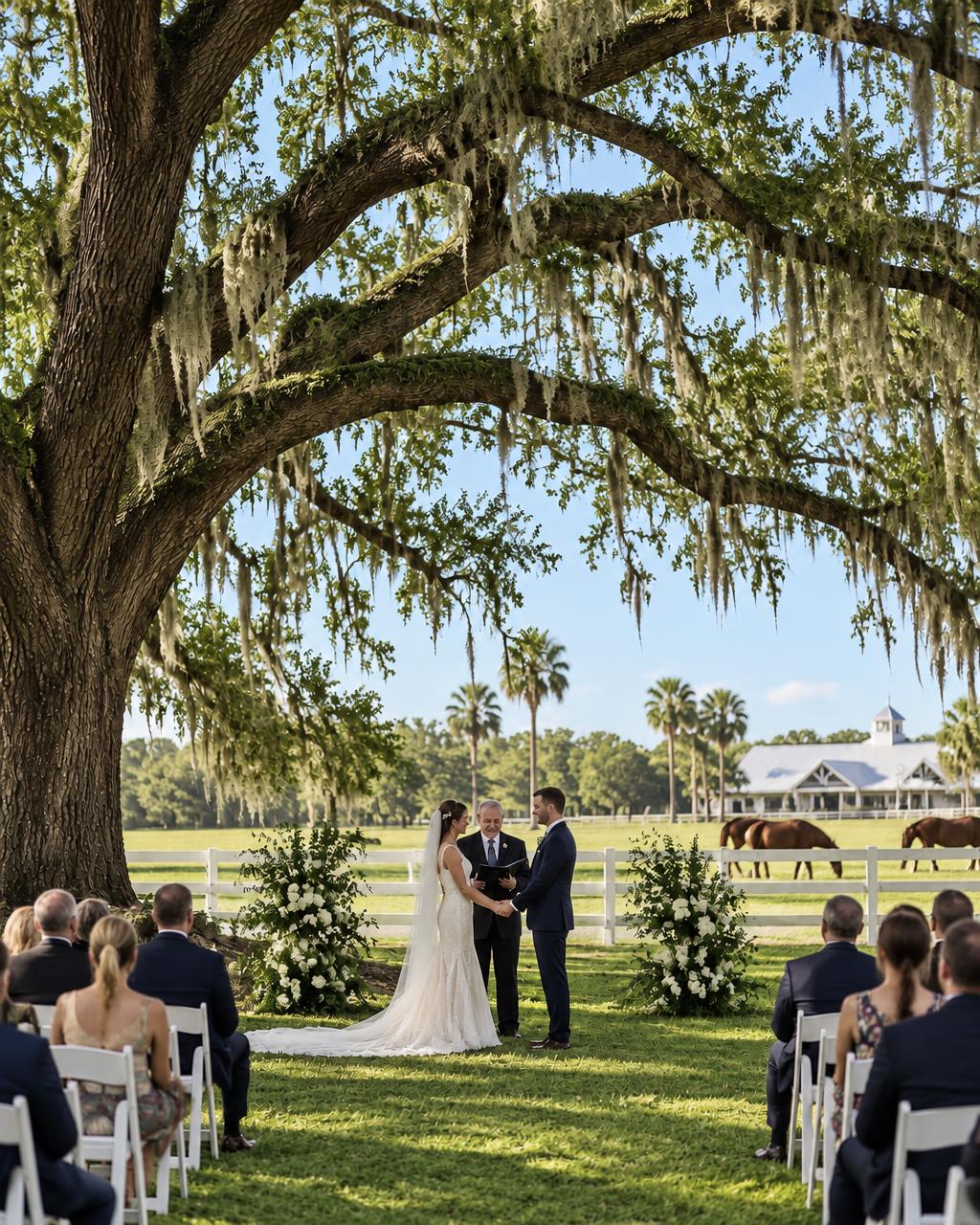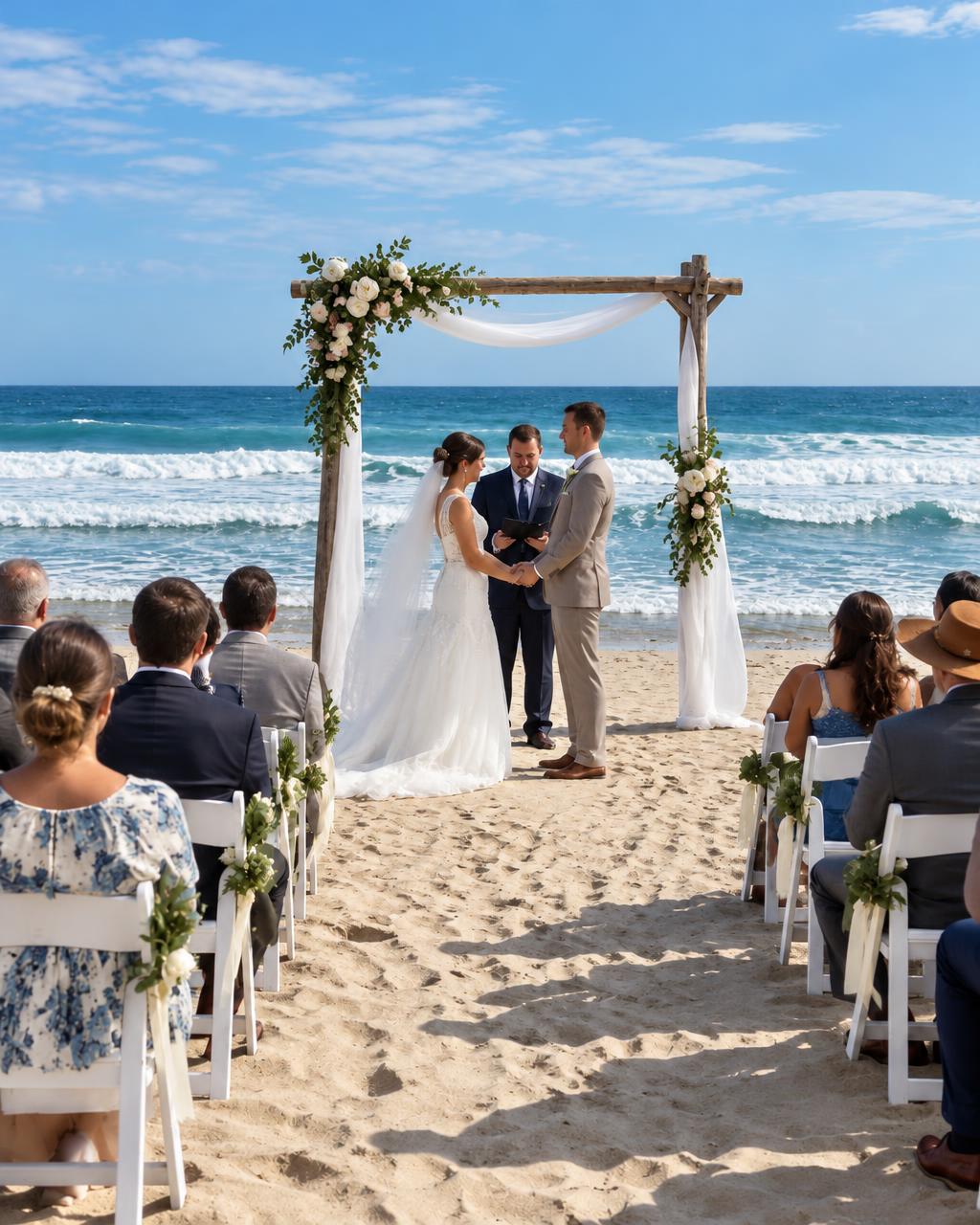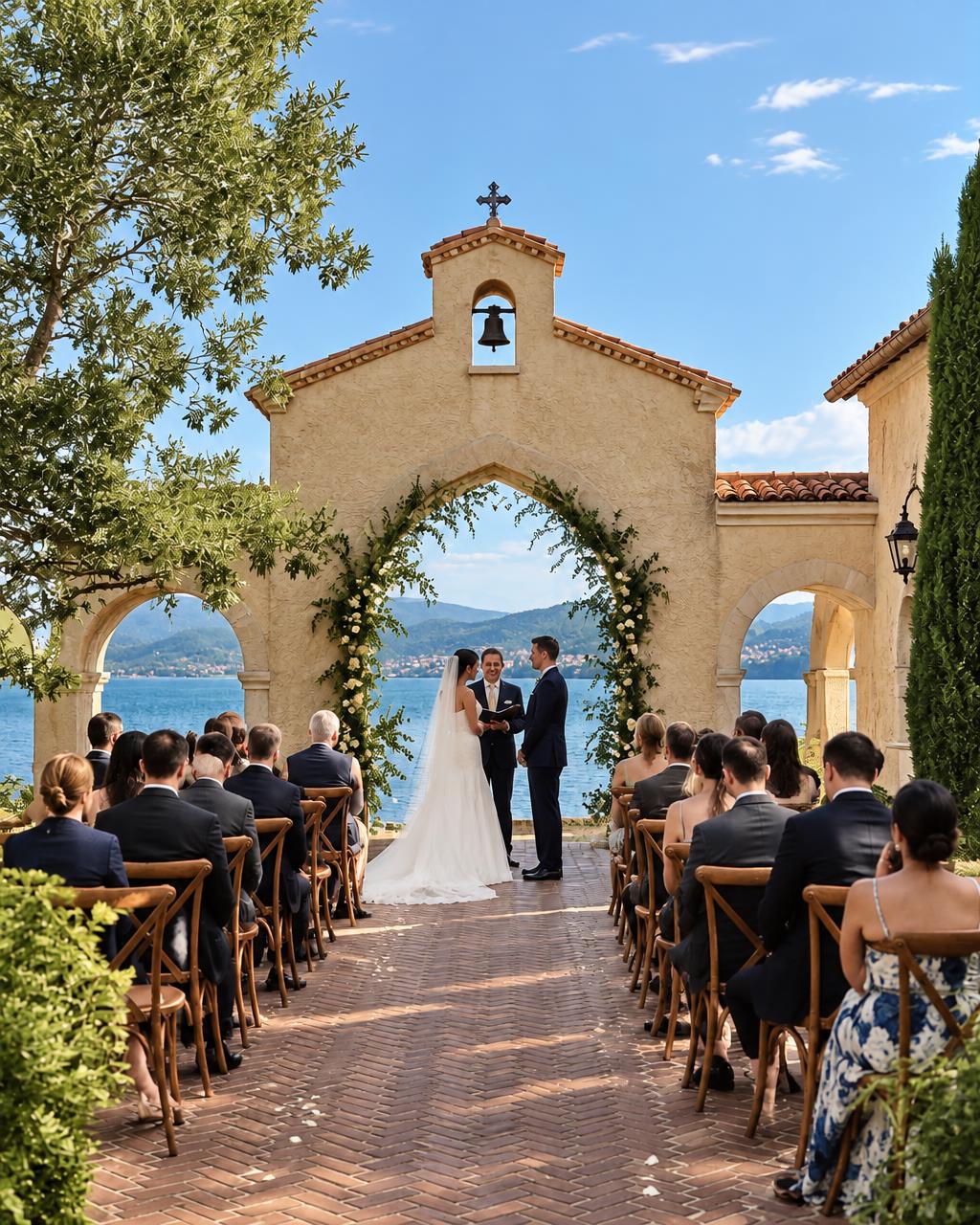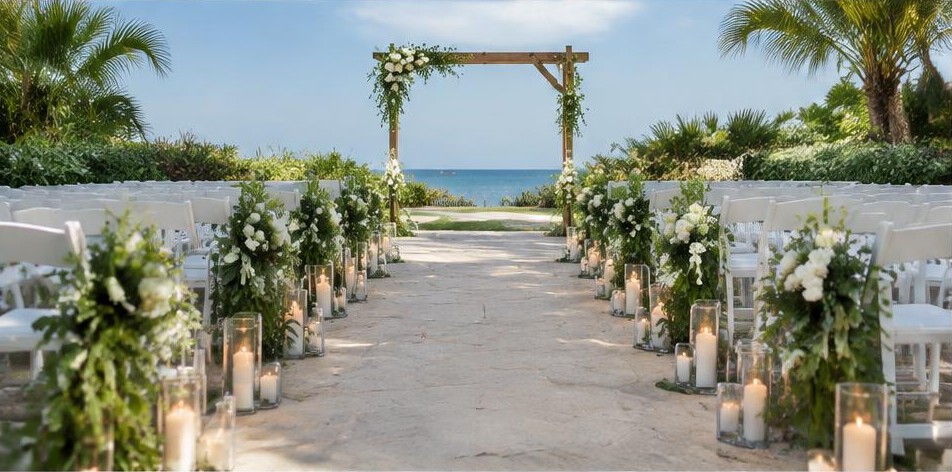
A garden wedding ceremony offers a setting that already feels alive: layered greenery, changing light, and paths that make the walk toward your partner feel distinct. But the prettiest corner of a Central Florida garden is not automatically the best place for guests to gather and hear your vows. A successful layout depends on how the space works at your ceremony hour, not just how it looks in a venue photograph.
When touring Florida garden wedding venues, bring your proposed ceremony time, estimated guest count, and a rough outline of the processional. Ask to walk the entire route from arrival through the ceremony exit. These twelve tips will help you evaluate the details that photographs cannot explain, including shade, ground conditions, sound, and the rain alternative. Use them to build a practical site plan with the venue and officiant while leaving room for the garden’s natural character to shape your celebration.
Tip 01
Walk the Whole Processional Path
Trace the processional from the actual waiting area, not simply from the first row of chairs. A winding garden path may hide the entrance beautifully, but it can also leave attendants unsure when to begin. Identify a clear release point and ask who will communicate the cue when the officiant and guests are ready. Include any gates or turns in the rehearsal.
Walk the route at your intended pace with the people who will use it together. Notice whether two people can comfortably pass planters, whether a dress will brush foliage, and where partners will separate at the front. Give your musician or sound operator a realistic entrance duration rather than estimating from distance alone.
Tip 02
Check Shade at the Ceremony Hour
Visit as close as possible to your planned ceremony time and note where shade actually falls across the seating. A shaded arbor does not mean shaded guests, and morning tour conditions may look very different by late afternoon. Ask the venue which areas usually offer shade around your wedding month, while recognizing that foliage and conditions can change.
Prioritize guest comfort in the layout rather than treating fans as the entire solution. Ask whether seating can shift beneath established tree cover without compromising the aisle or views. Locate an approved waiting area where guests can stay comfortable before seating begins, and arrange water wherever the venue permits refreshments.
Tip 03
Test Sightlines from Seated Eye Level
Stand where you expect to exchange vows, then have someone sit in several proposed guest positions. Check the back row, outside corners, and any seats behind tree trunks or permanent garden features. An arbor that looks open from the aisle can become visually crowded once an officiant, attendants, and floral arrangements occupy the same space.
Keep the couple’s faces visible by adjusting positions before adding more decoration. Ask the officiant about arrangements that suit your ceremony, especially if a table or cultural element belongs at the front. Share the seating sketch with your videographer so camera positions can complement guest views rather than competing with them during important moments.
Tip 04
Evaluate the Ground Beneath the Layout
Look closely at the surfaces where chairs, the aisle, and the couple’s standing positions will go. Grass, gravel, brick, and mulch each affect how the ceremony feels underfoot. Ask the venue how the designated lawn typically presents after rain and whether the proposed seating area has uneven patches that should influence the layout.
Before ordering an aisle runner or specialty chairs, confirm what the venue allows on that particular surface. Discuss ground suitability and any installation needs with the venue and rental provider rather than assuming indoor equipment will work unchanged outdoors. Include a plain-language footwear note on your wedding website so guests know whether they will cross lawn or gravel.
Tip 05
Get Garden Rules Before Choosing Décor
Request the garden’s current ceremony rules before approving floral mechanics, chair counts, or an aisle design. Ask specifically about attaching items to structures, placing décor in planting beds, using petals or confetti, and bringing refreshments into the ceremony area. A restriction discovered after ordering can force an expensive redesign or leave someone improvising during setup.
Clarify what remains open to other visitors and whether paths must stay unobstructed. Then give vendors one shared list of approved locations, setup windows, and removal expectations. If you want freestanding floral pieces beside an established bed, have the venue approve that placement rather than relying on a photograph from another event.
Tip 06
Verify Seasonal Appearance Without Expecting a Guarantee
Ask for recent photographs taken around your wedding month, ideally showing the exact ceremony area rather than highlights from across the property. Find out which plants provide year-round structure and which contribute seasonal color. A garden’s appearance can shift with weather, maintenance, and planting decisions, so treat previous photographs as useful references rather than promises.
Build your palette around dependable visual elements such as foliage, stonework, or an existing pavilion instead of one hoped-for bloom. Ask whether pruning, bed replacement, or other scheduled work could affect the background. If a particular flowering border matters to you, identify a second composition you would still enjoy if that border looks different.
Tip 07
Plan for Insects Without Disrupting the Garden
Ask venue staff what guests typically notice around the ceremony area at your planned time of day. Conditions beside dense planting or water may differ from those on an open terrace. Find out what insect-management practices the property already uses and what guest-provided products are permitted; do not assume additional sprays or scented installations are welcome.
Keep guest support simple and venue-approved. You might include a brief outdoor-setting note before the wedding and make permitted personal repellent available near the arrival area. Avoid placing open sweet drinks beside the seating, and ask the caterer or planner where refreshments should wait. Assign someone to clear cups before guests settle in.
Tip 08
Edit Ceremony Details for Wind
Watch how air moves through the actual ceremony location, especially near open lawns and gaps between buildings. Wind can turn loose vow pages, lift lightweight signs, and repeatedly move hair across faces. Choose a vow book instead of individual sheets and rehearse opening it to the correct page while holding your partner’s hand or a microphone.
Review veils, ribbons, hanging pieces, and tall arrangements with the relevant vendors and the venue. Ask them to recommend appropriate designs and placements for the setting rather than creating improvised fixes yourself. Give the officiant a bound or otherwise organized ceremony script, and keep a spare readable copy with the person coordinating the ceremony.
Tip 09
Choose Light for Faces, Not Just Backgrounds
During your site visit, take simple reference photos facing the couple’s proposed position from the aisle and side seats. Look for bright patches crossing faces, deep shadows beneath an arbor, or a background much brighter than the people. These photographs are planning references, not a substitute for your photographer’s or videographer’s assessment of the changing light.
Ask whether rotating or shifting the ceremony layout could create more consistent light without sacrificing the garden view. Avoid choosing a time solely because someone calls it golden hour; trees and structures may block that light at your specific site. Share the date, start time, and orientation with your visual team before finalizing the layout.
Tip 10
Make Spoken Words the Audio Priority
Pause during the tour and listen for fountains, nearby roads, maintenance equipment, and activity from neighboring spaces. Ask whether controllable sounds, such as a decorative fountain, can be paused during the ceremony. Confirm who provides sound reinforcement for guests and who operates it, since recording audio and helping everyone hear are related but separate jobs.
Give the officiant and audio team a list of every speaker, reading location, and musical cue. A reader standing several feet away may need a different arrangement from the officiant. For ceremony filming, discuss voices and microphone arrangements in advance, including quiet personal vows, rather than assuming one device will capture every voice equally.
Tip 11
Make the Rain Alternative a Complete Ceremony Plan
Tour the rain location with the same attention you give the garden. Check its guest capacity, processional route, seating orientation, sound arrangements, and space for any meaningful ceremony elements. Ask whether the alternative is available for your event and what changes it requires. A room name on a proposal is not yet a usable backup layout.
Confirm who makes the location decision, when that decision is needed for setup, and how vendors and guests will be notified. Defer weather-related operating decisions to the venue and your planning team. Prepare a separate rain-plan diagram and cue sheet so relocating does not also require reinventing the entrance order, reading positions, and ceremony exit.
Tip 12
Connect Guest Access with Vendor Access
Map the route from parking or drop-off to seating, restrooms, and the rain location. Ask the venue about step-free routes, surface changes, walking distances, and available accommodations, then share accurate details with guests who request them. A garden entrance may look close on a map while requiring a longer walk around restricted planting areas.
Separately confirm vendor arrival instructions, unloading locations, and permitted equipment routes. Give the ceremony videographer the actual site-access time, not just the ceremony start time, so preparation can be coordinated within the booked coverage. Designate someone to greet arriving vendors and direct late guests, keeping those questions away from the couple and officiant as the ceremony approaches.
Bring Your Ceremony Plan Together
A beautiful garden ceremony does not need to disguise its outdoor setting. It needs a layout that works with the paths, plants, light, and sounds already there. Once those decisions are settled, flowers and other details can support the experience instead of trying to solve problems they were never designed to address.
For your next planning step, schedule a ceremony-focused walkthrough and bring a one-page sketch showing arrival, seating, vows, and departure. Add a second sketch for rain. Ask the venue to confirm rules and access details, then share both plans with your officiant and ceremony vendors. Resolve the open questions before ordering décor so your choices serve the actual space and the people gathering in it on your wedding day.
Explore my wedding ceremony videos, compare ceremony collections, or check your wedding date. Every collection can be booked up to 12 months ahead; couples planning further ahead can join the waitlist without reserving a date.