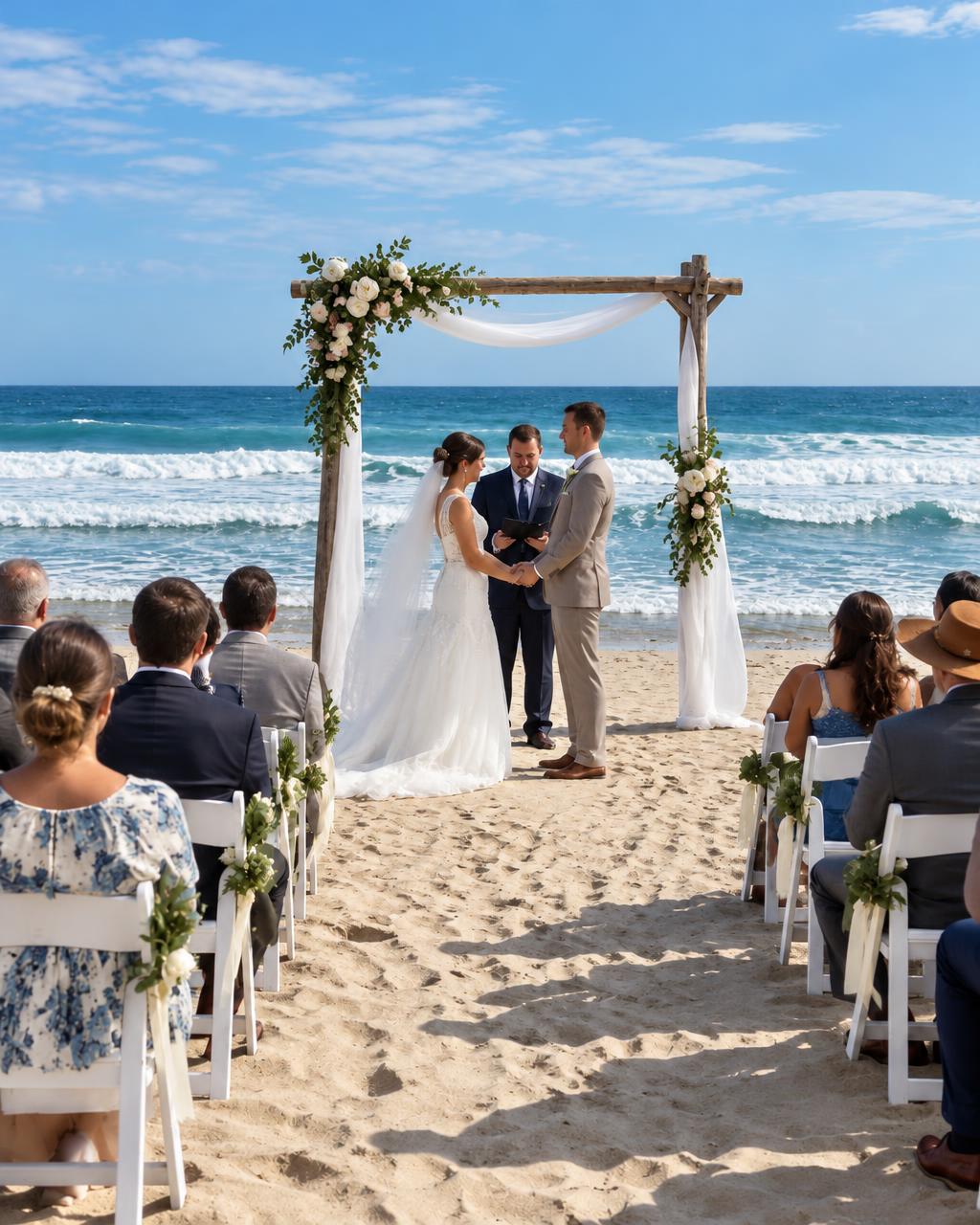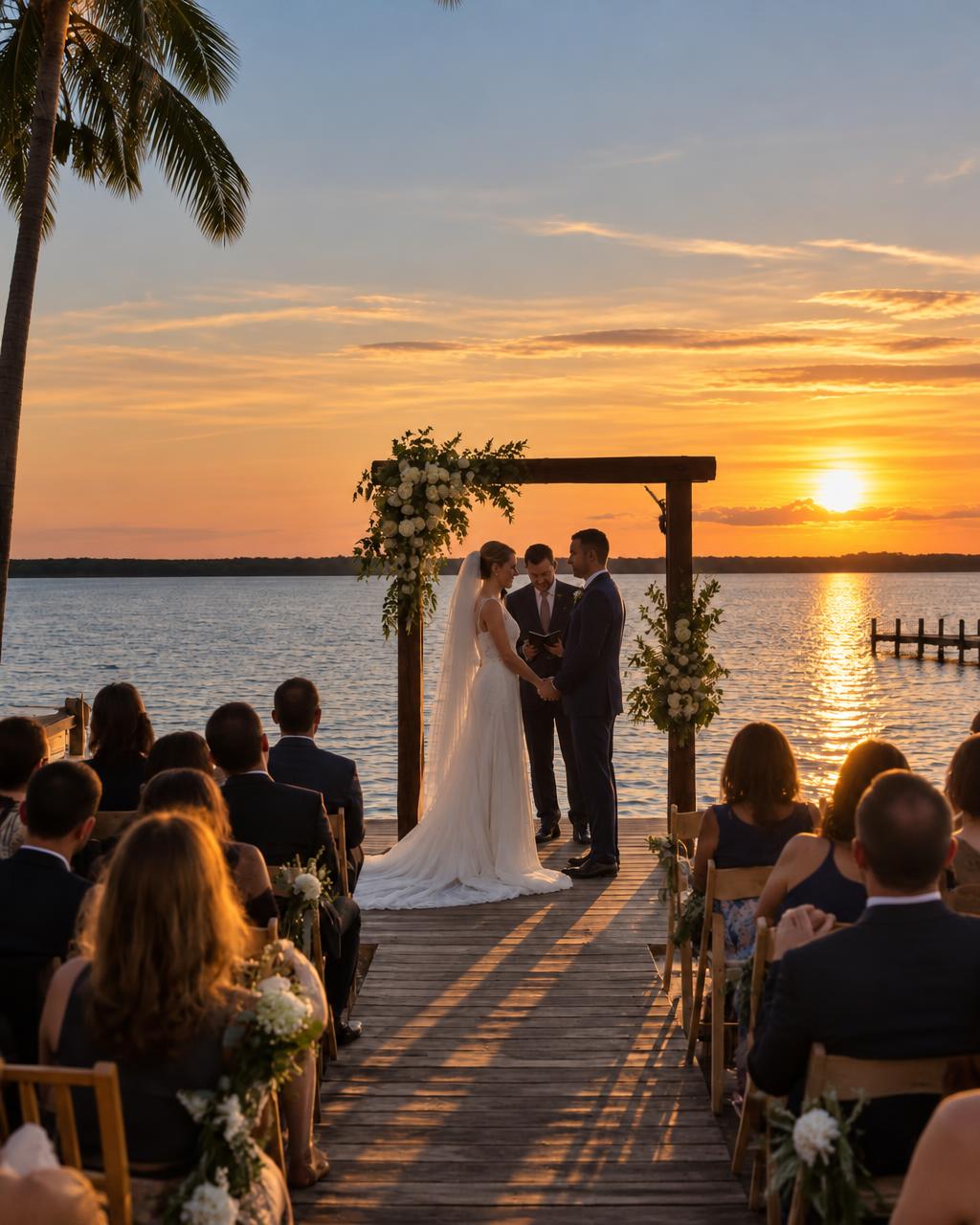
A waterfront wedding ceremony can feel wonderfully simple: an open view, moving water, and your favorite people gathered close. Yet a lakeside lawn and a bayfront terrace create different planning questions from an indoor ceremony room. Wind can compete with vows, afternoon light can leave guests squinting, and the prettiest shoreline may not be the most practical place for chairs or an aisle. The goal is to let the setting support the ceremony rather than make everyone work around it.
For Florida venues, evaluate the waterfront as a working ceremony space, not only as a photograph. Ask where guests arrive, what happens on the water during your ceremony window, and how the location changes when weather interrupts the plan. These twelve tips help you turn a beautiful view into a thoughtful arrangement for your guests, officiant, and ceremony filming team, with a backup that preserves what matters most: hearing and witnessing your vows.
Tip 01
Choose a Venue-Approved Ceremony Area Near the Water
Start by asking the venue to identify its designated ceremony footprint and explain any boundaries around the shoreline, seawall, dock, or terrace. Do not assume that a photogenic stretch of grass is available for guests or that a dock can serve as an aisle. Have the venue mark approved locations for the couple, officiant, chairs, and vendor positions on a shared layout.
Treat the water’s edge as a venue-managed boundary, not an opportunity to squeeze in another row. Ask who will direct guests away from restricted areas and explain shoreline expectations to families with children. If the preferred view requires an arrangement the venue cannot approve, choose another angle or ceremony space rather than improvising your own edge precautions.
Tip 02
Walk the Complete Guest Arrival Route
Walk from the actual parking or drop-off point to the ceremony seats, rather than starting your tour on the waterfront lawn. Note changes between pavement, gravel, grass, and decking, along with any gates or indirect paths. Ask the venue about accessible routes and available assistance, then share the relevant details privately with guests who need them.
Think through arrival in ceremony clothing, too. A long lawn approach may affect footwear choices, while an unmarked turn can send guests toward a marina instead of the aisle. Include a concise surface or walking-distance note in your guest information. Assign someone to the last confusing junction so late arrivals receive directions without calling you.
Tip 03
Plan for Wind Before Choosing Ceremony Details
Visit the ceremony spot at a comparable time of day and ask venue staff how wind typically affects that particular waterfront. Conditions still vary, so use their observations to shape options rather than predict your wedding weather. Discuss the proposed location with your officiant and videographer, especially if the waterfront exposure makes ordinary conversation difficult during your walkthrough.
Choose vow books instead of loose pages, and ask your florist which arrangements suit the venue’s wind requirements. Rehearse how a veil or long ribbons will behave around your face and hands. Let the filming team determine its audio approach; your planning job is to provide accurate location details and avoid last-minute position changes that undermine preparation.
Tip 04
Evaluate the Entire Background, Not Just the Water
Stand where guests will sit and look beyond the couple’s proposed position. A broad lake view may include maintenance buildings, rental equipment, or a busy path just outside the venue photographs. On a bayfront, marina signs and dock activity may dominate one direction. Compare a few venue-approved orientations before choosing the one that looks best from the aisle.
Next, consider the view from the side, where another camera may record your expressions. Ask the videographer whether the proposed arrangement leaves useful sightlines without blocking guests. A modest rotation of the seating layout may frame more water and less activity. Confirm any layout change with the venue, including whether decorative elements would obstruct the view you chose.
Tip 05
Check Where the Sun Will Be During Your Vows
Do not judge ceremony light only from a morning venue tour if your vows are planned for late afternoon. Ask about shade at your intended time and review the ceremony orientation with your photographer and videographer. Waterfront light can include glare from the water, so consider what the couple, officiant, and front rows will actually face.
Look for compromises that preserve the view without making guests stare directly toward bright light. An angled layout or shaded terrace may serve everyone better than a perfectly centered shoreline backdrop. If you are considering a sunset ceremony, allow for the full procession, readings, and recessional rather than timing only the vows. Discuss the complete schedule before publishing invitations.
Tip 06
Listen to the Waterfront Before Planning Ceremony Audio
Pause your venue tour and listen from the proposed vow location. Water may sound gentle nearby, but fountains, waves against a seawall, dock equipment, and waterfront dining can create a more complicated soundscape. Ask whether any venue-controlled fountains or music can be paused, and identify sounds that are outside the venue’s control.
Separate guest audibility from recording needs when discussing audio. Ask who provides ceremony amplification, who operates it, and how the officiant, readers, and musicians will coordinate with that person. Share the sound conditions with your videographer so they can plan recording sources. A microphone intended for the video does not automatically mean guests in the back row will hear.
Tip 07
Arrange Seating Around Comfort and Sightlines
Build the seating plan from the approved ceremony area, not from the maximum number of chairs that can fit beside the water. Ask the venue which surfaces accommodate its seating and how it handles uneven ground. Then review the arrangement from the back row: guests should see the couple without looking through large floral pieces or a crowded aisle.
Reserve suitable seats for guests who need a shorter approach or clearer view, and tell ushers exactly where those seats are. Consider whether a broad, shallow arrangement brings people closer than many narrow rows. For an exposed bayfront terrace, ask about nearby shade before guests take their seats. Avoid seating everyone early while the wedding party remains comfortably indoors.
Tip 08
Ask About Boat Traffic and Waterfront Activity
A waterfront venue does not necessarily control the water in front of it. Ask about nearby boat ramps, marina departures, sightseeing routes, and other recurring activity around your proposed ceremony time. Venue staff may help you understand patterns, but do not treat a quieter tour as a promise that your vows will have an uninterrupted backdrop.
Discuss with your officiant how to handle a brief burst of engine noise during a reading or vow. A natural pause may be less distracting than trying to speak louder, depending on the ceremony and officiant’s judgment. Keep the schedule flexible enough for ordinary interruptions, and avoid relying on boats disappearing from the background for a particular moment.
Tip 09
Agree on a Weather Decision Process
Florida waterfront planning needs a clear weather process, not just a hopeful forecast check. Ask the venue who monitors conditions, who decides whether the outdoor space remains available, and when the location decision must be made. Follow venue procedures and qualified guidance rather than creating your own weather thresholds. Record the decision process alongside your ceremony timeline.
Find out what an earlier relocation means for flowers, chairs, sound, and guest arrival. Ask each vendor what notice they need to prepare the alternate space, without assuming every setup can move at the last minute. Name one planning contact to relay the venue’s decision to everyone, so the officiant and filming team do not receive conflicting instructions.
Tip 10
Confirm Equipment Routes and Setup Access
The scenic guest walkway may not be the route vendors can use. Ask the venue to identify loading access, approved equipment paths, entry permissions, and any restrictions on carts or vehicles. Share those details before the wedding. A lakeside ceremony reached through several gates requires different coordination from a bayfront terrace beside an approved loading area.
Confirm when the ceremony space becomes available and whether equipment must be in position before guests arrive. Ask the filming and sound teams to coordinate their locations with the planner rather than claiming leftover corners. Keep equipment movement separate from the processional plan wherever the venue permits, and identify where cases can be stored outside the ceremony background.
Tip 11
Get Waterfront Venue Rules Into the Working Plan
Request the venue’s current ceremony rules before ordering decor or finalizing your entrance. Waterfront properties may have specific policies for docks, furniture, amplified sound, floral installations, aisle decorations, and anything released or tossed. Ask about the exact space you are booking; rules for an adjacent lawn or restaurant terrace may not apply to your ceremony area.
Turn the answers into a short vendor briefing with approved locations, access times, and the person authorized to resolve questions. If your ceremony includes a religious or cultural element, review its needs with your officiant or community and then confirm the venue can accommodate it. Resolve mismatches during planning rather than asking someone to alter a meaningful practice moments beforehand.
Tip 12
Design a Backup Ceremony You Would Happily Use
Walk through the alternate ceremony space with the same care as the waterfront. Identify where you will stand, how guests enter, where readers wait, and what forms the background. Confirm that the space accommodates your guest count and ceremony arrangement. An indoor room with windows overlooking the lake may preserve the waterfront connection without duplicating the outdoor layout.
Prepare a separate seating diagram and processional route rather than labeling the backup simply “inside.” Check which decor can transfer and which elements need an alternative. Share both plans with the officiant and filming team, including any changed sound arrangements. Choose a guest-notification method in advance so people head directly to the correct location instead of gathering at the shore.
Bring Your Ceremony Plan Together
The strongest waterfront ceremony plan begins with the people using the space. Guests need a clear arrival route and comfortable place to sit; your officiant needs an arrangement that supports the ceremony; and your filming team needs accurate access, layout, and sound information. The lake or bay remains the setting, but it does not have to dictate every decision.
For your next planning step, schedule a waterfront walkthrough near your intended ceremony time. Bring a draft layout and ask the venue to review the shoreline boundaries, guest approach, vendor access, and weather decision process. Finish by visiting the backup space and documenting both arrangements. Those specific answers will help you choose ceremony details that belong in the space you are actually using.
Explore my wedding ceremony videos, compare ceremony collections, or check your wedding date. Every collection can be booked up to 12 months ahead; couples planning further ahead can join the waitlist without reserving a date.