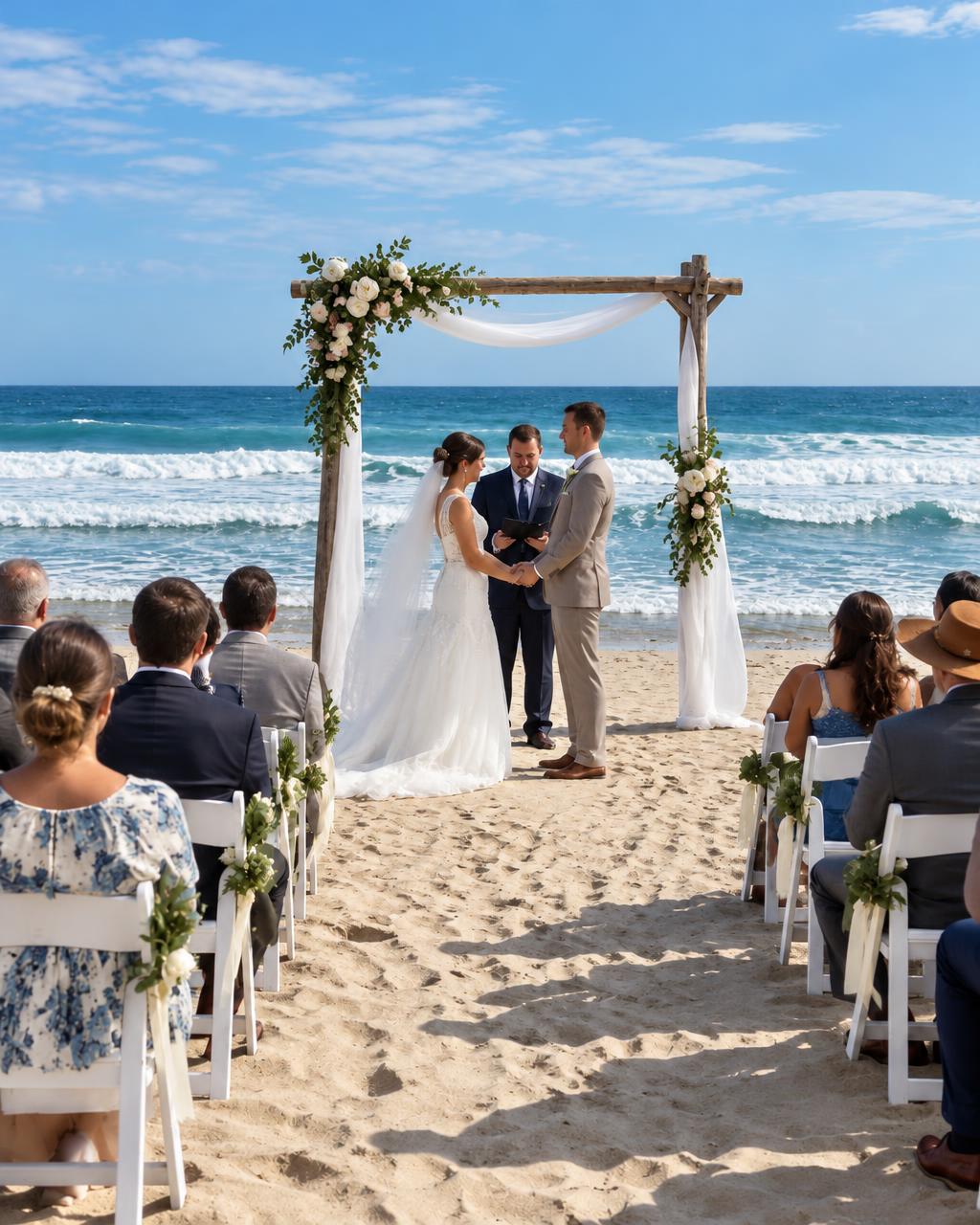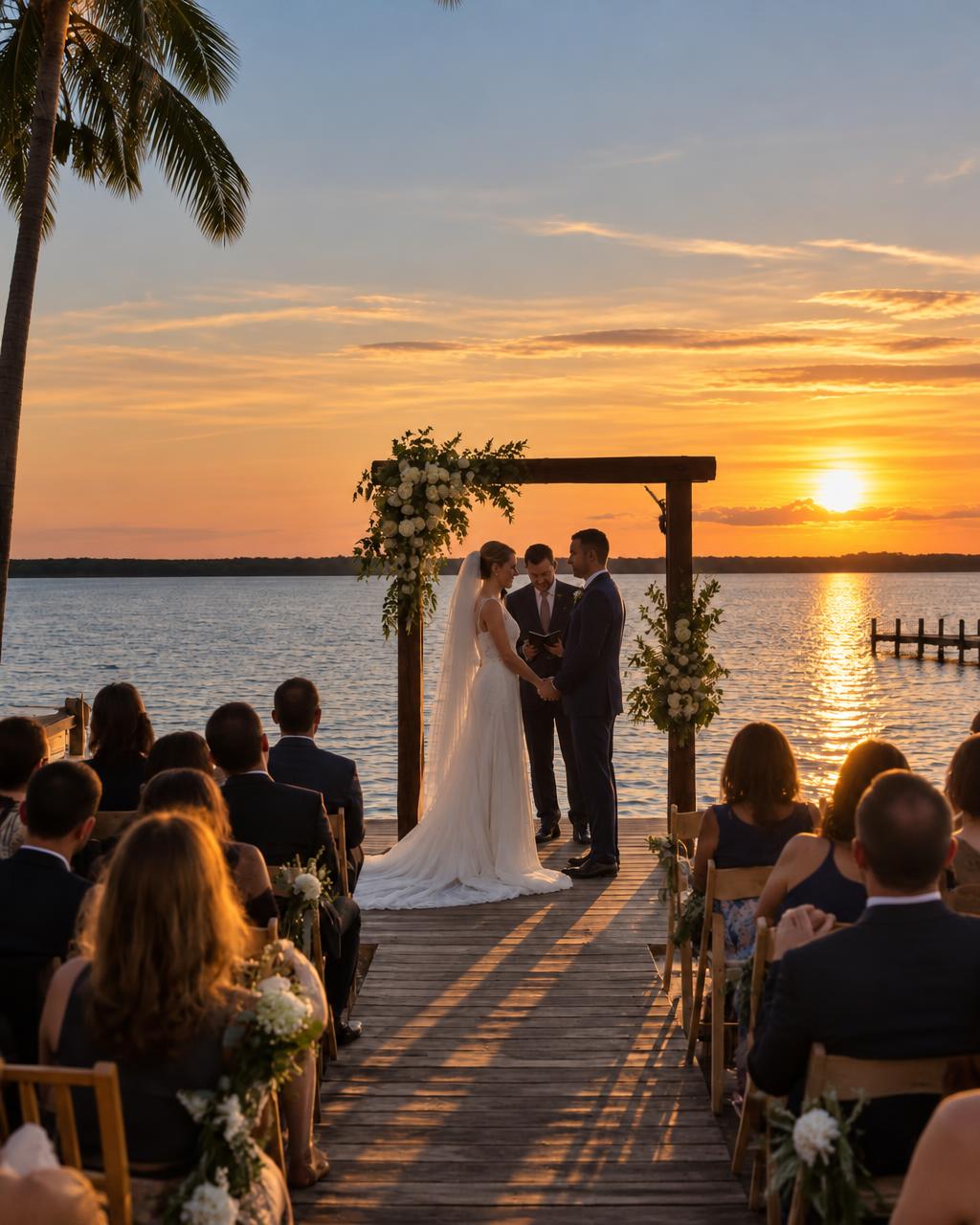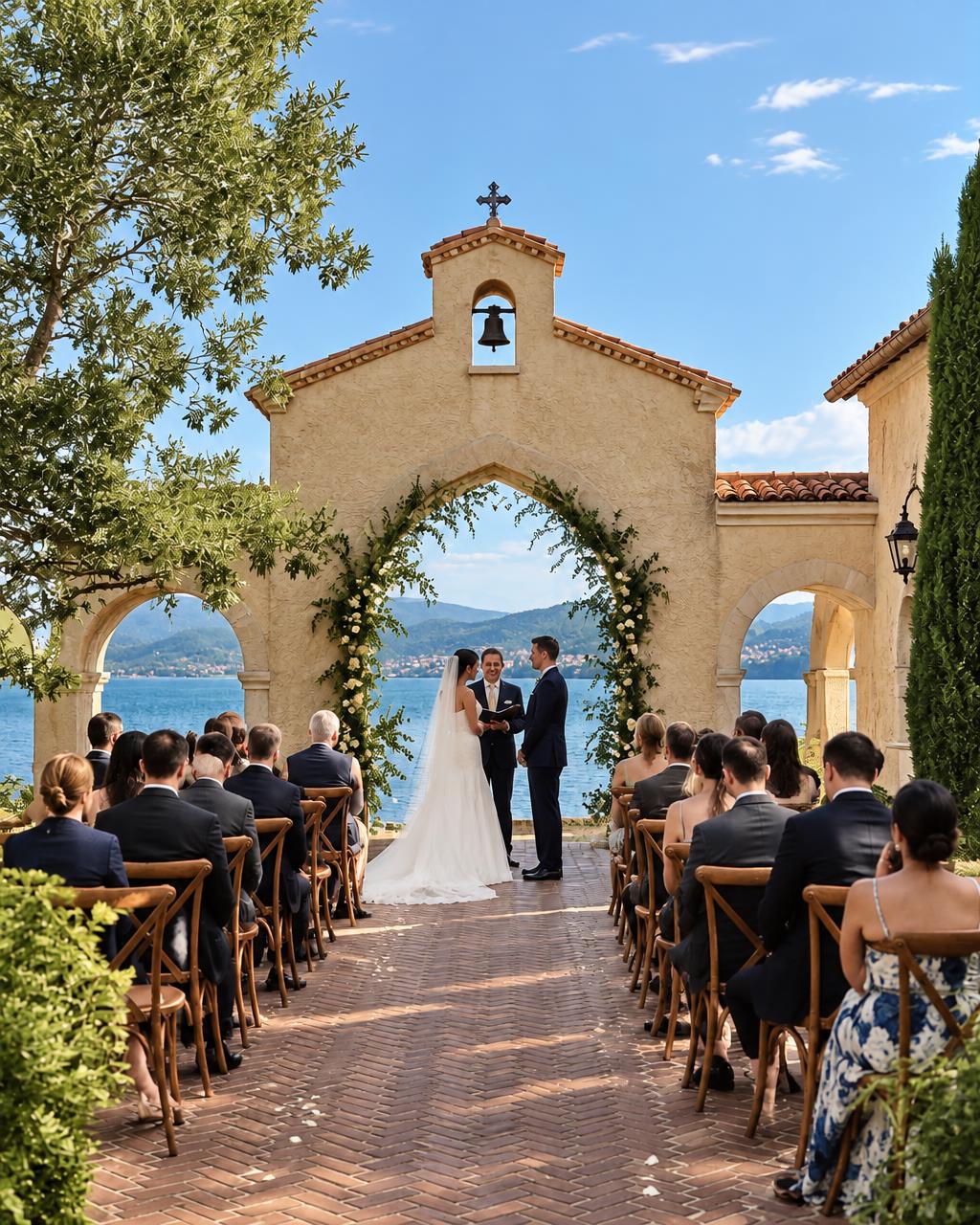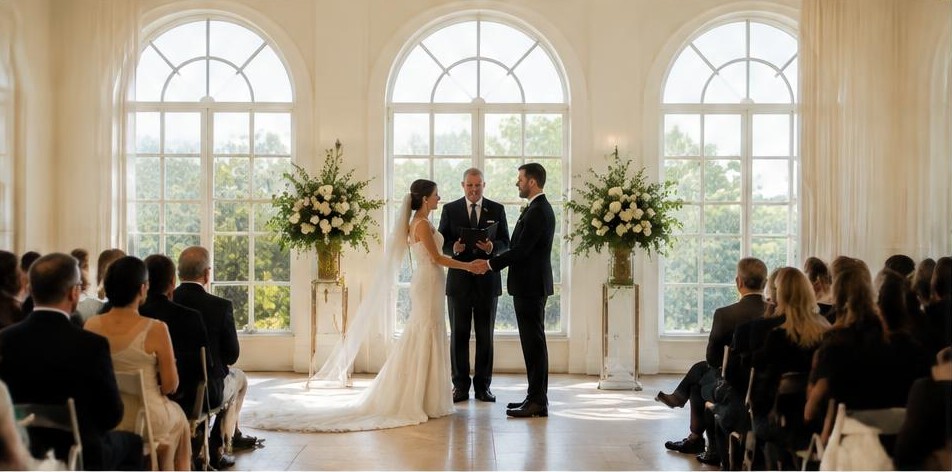
An outdoor wedding ceremony in Florida can put your vows beneath spreading trees, beside a garden, or within view of the water. The setting also creates decisions that a photograph cannot answer: where guests will wait, what happens when the lawn is wet, and who tells everyone if the ceremony moves. Start with how the space will function, then choose the details that make it feel like your wedding day.
These fifteen tips turn a beautiful outdoor location into a workable ceremony plan. Use them during venue tours, planning calls, and your final walkthrough, with your coordinator and ceremony vendors involved where relevant. Ask to see the actual ceremony area and backup spaces rather than relying only on a venue brochure. The goal is not to predict Florida weather perfectly; it is to give people clear options, comfortable places to gather, and fewer last-minute questions.
Tip 01
Check shade where people will actually sit
Visit the ceremony space near your planned start time and look at the guest seating area, not just the backdrop. A tree may shade the couple while leaving every chair exposed. Ask the venue how shade changes around your wedding date, and identify where guests can wait before taking their seats.
Mark shaded waiting areas on your layout and have an usher direct early arrivals there. If parasols are permitted, decide where guests can collect and return them. Consider how open parasols could block views from the rows behind; they may work better for waiting than for the ceremony itself.
Tip 02
Choose a rain location you would genuinely use
Ask to walk through the rain location with your expected guest count in mind. Where will the aisle, chairs, ceremony backdrop, and entrance go? A room that looks spacious while empty may feel different once the venue adds seating. Request a specific ceremony layout rather than accepting a general promise of indoor space.
Confirm when that space becomes available and whether another event affects access. Decide which decorations move inside and which stay out of the backup plan. Keep an indoor version of your processional and seating arrangement ready so a location change does not require rebuilding the entire ceremony on the wedding morning.
Tip 03
Follow the venue's lightning and emergency guidance
Treat lightning planning as a separate conversation from keeping guests dry. Ask the venue representative to explain its emergency guidance, designated shelter locations, and communication process. Do not assume a pavilion, tent, or covered ceremony structure serves the same purpose as the shelter identified in the venue's plan.
Share the venue's instructions with your coordinator, officiant, ushers, and vendors before the event. Clarify who announces a pause or relocation and who helps direct guests according to that guidance. If the property cannot explain its process clearly, request clarification from venue management rather than creating your own weather thresholds or shelter rules.
Tip 04
Edit ceremony details for wind
Look closely at anything that hangs, flutters, or sits loosely outdoors: veils, aisle ribbons, printed readings, signs, and vow pages. Ask the venue and decorator what works in that particular space. A waterfront terrace may call for a different paper and fabric plan than a garden enclosed by buildings.
Use a vow book instead of several loose sheets, and give readers a bound or clipped copy of their text. Discuss veil placement with your stylist and practice turning toward your partner. Let the florist or rental team handle appropriate installation choices for larger pieces rather than improvising fixes during guest arrival.
Tip 05
Plan guest sound and recorded audio separately
Ask who is responsible for making the ceremony audible to guests and who is recording the words. A sound system and a videographer's recording equipment serve different purposes. Identify every speaking position, including the officiant, couple, and readers, so neither team discovers an additional speaker after the ceremony begins.
Tell both teams about nearby fountains, traffic, beach activity, or other persistent sound. Ask whether a noisy water feature can be paused if the venue permits it. Arrange an audio check before guests are seated, and confirm how microphones will be managed when vows, readings, or other ceremony elements change speakers.
Tip 06
Walk the terrain from arrival to the aisle
Walk the complete guest route, including parking, paths, lawn transitions, and the ceremony entrance. Note surfaces that may be difficult for particular guests, such as loose gravel or uneven grass. Ask the venue what established accessible routes are available and how ground conditions affect its choice of ceremony location.
Include useful surface information on your wedding website so guests can choose footwear with context. Privately ask anyone who may need assistance what would help, rather than guessing. Confirm the practical arrangements with the venue, including seating positions and routes, and repeat that check for the indoor or alternate ceremony space.
Tip 07
Give guests useful outdoor ceremony information
Tell guests that the ceremony is outdoors even if the reception is inside. Include the expected outdoor portion, the surface underfoot, and where they should go upon arrival. A clear note about a garden ceremony followed by an indoor reception is more helpful than a vague suggestion to dress comfortably.
Think through arrivals for older relatives, families with children, and anyone who needs a place to pause. Ask the venue about nearby restrooms and indoor waiting options. Assign a greeter who can answer these practical questions without sending guests across the property to find the couple or interrupt the officiant's preparations.
Tip 08
Ask about insects before adding remedies
During your walkthrough, ask venue staff what insect-related preparations they normally make for the ceremony area. Point out nearby landscaping and water features and ask whether certain seating areas are preferable. Keep the conversation specific to the property rather than assuming every Florida outdoor venue needs the same approach.
If you want to offer insect repellent, first confirm the venue's policy and decide where guests can find it before seating. Keep optional products in their original labeled containers. Avoid introducing scented sprays, candles, or other treatments into the ceremony setup without discussing them with the venue and the vendors responsible for that area.
Tip 09
Make drinking water easy to find
Place water where guests naturally arrive or wait, subject to the venue's service rules. A station behind the ceremony backdrop may look discreet but be practically invisible. Ask who provides the water, cups, replenishment, and cleanup; those tasks should belong to a named team rather than remain an unassigned courtesy.
Discuss whether guests may bring drinks to their seats and provide a convenient place for empty containers. Keep the station away from the processional entrance so arrivals do not form a queue across the aisle. Arrange water for the couple, wedding party, and officiant before lineup, when stepping away is still straightforward.
Tip 10
Build the timeline around outdoor transitions
Choose your ceremony time with more than sunset portraits in mind. Consider the light on the seating area, the walk from the preparation space, and how long guests will be outside before the processional. Ask the venue and photographer to discuss these conditions together instead of making separate assumptions about the schedule.
Distinguish guest arrival time, seating time, lineup time, and the actual ceremony start on the working timeline. Ask your officiant for an estimated duration based on your chosen elements; religious and cultural sequences should follow their guidance. Avoid filling every spare minute, especially when the backup location requires a different arrival route.
Tip 11
Design seating for views and guest movement
Review the seating plan from the back row and from both sides, not only from the aisle entrance. Ask the venue to account for trees, columns, landscape beds, and other features that interrupt views. Have the rental team confirm which chair options suit the surface and what layout the venue permits.
Reserve seats with individual needs in mind, including room for mobility devices and companions where requested. Clarify whether parents or grandparents enter during the processional or sit beforehand. Give ushers a simple seating diagram, and prepare a matching version for the rain location so important accommodations survive a last-minute move indoors.
Tip 12
Choose florals with an outdoor and indoor plan
Tell your florist how long the arrangements will be outdoors, where direct sun falls, and when installation is allowed. Ask for recommendations suited to those actual conditions rather than choosing solely from an inspiration photo. Discuss the full ceremony backdrop, including whether arrangements could obscure the couple from seated guests.
Identify a small number of pieces that can transition to the rain location if needed. Confirm who moves them, when that decision must happen, and what the alternate placement looks like. Keep a simpler indoor design ready; moving every aisle arrangement may not be practical within the venue's available setup window.
Tip 13
Confirm access for guests and ceremony equipment
Ask the venue to show you the guest entrance and the vendor route separately. Confirm gate access, parking instructions, unloading areas, and the time vendors may enter the ceremony space. A nearby parking lot does not necessarily mean equipment can be brought directly to the lawn or waterfront ceremony area.
Check whether moving indoors changes any of those routes or access times. Give vendors the correct property contact and entrance instructions before the wedding day. For guests, use the venue's approved address and arrival directions, especially when a property has multiple entrances that lead to different buildings or ceremony locations.
Tip 14
Coordinate vendors around one ceremony layout
Send the same layout and timeline to the officiant, coordinator, florist, sound provider, photographer, and ceremony videographer. Include the couple's position, reader location, processional route, and planned camera areas. Shared information helps identify conflicts such as a speaker placed in a sightline or a floral pedestal occupying a camera position.
Ask vendors to review both outdoor and backup layouts, including venue restrictions on equipment placement. For ceremony-only filming, confirm that the booked coverage window aligns with the ceremony schedule, not unrelated reception activities. Discuss what a delayed start or relocation would mean under each vendor's agreement rather than assuming everyone can extend their time.
Tip 15
Name the people who make and communicate decisions
Create a short contact sheet naming the venue's decision-maker, your coordinator or designated planning contact, and one reachable representative for each ceremony vendor. Separate weather and emergency decisions governed by venue guidance from personal preferences about decor or layout. Your florist should not have to interpret an unanswered group message about relocating.
Agree on when the rain-location decision will be discussed, who receives the update, and how guests will learn where to go. Identify a backup contact if the primary person is unavailable. Keep the final instruction concise: ceremony location, any timing change, and immediate assignments, with confirmation from the people responsible for carrying them out.
Bring Your Ceremony Plan Together
The strongest outdoor ceremony plan connects the setting to the people using it. Shade matters most where guests wait and sit. A rain room matters when its layout and access are understood. Audio planning matters when every speaker can be heard. None of these choices needs to compete with a beautiful ceremony; they help the setting support the vows rather than distract from them.
For your next planning step, schedule a ceremony-focused walkthrough with your venue contact and coordinator, if you have one. Bring your guest count, draft timeline, and both location layouts. Leave with a written list of unresolved questions, a person responsible for each answer, and a date to confirm the remaining arrangements with your officiant and ceremony vendors.
Explore my wedding ceremony videos, compare ceremony collections, or check your wedding date. Every collection can be booked up to 12 months ahead; couples planning further ahead can join the waitlist without reserving a date.