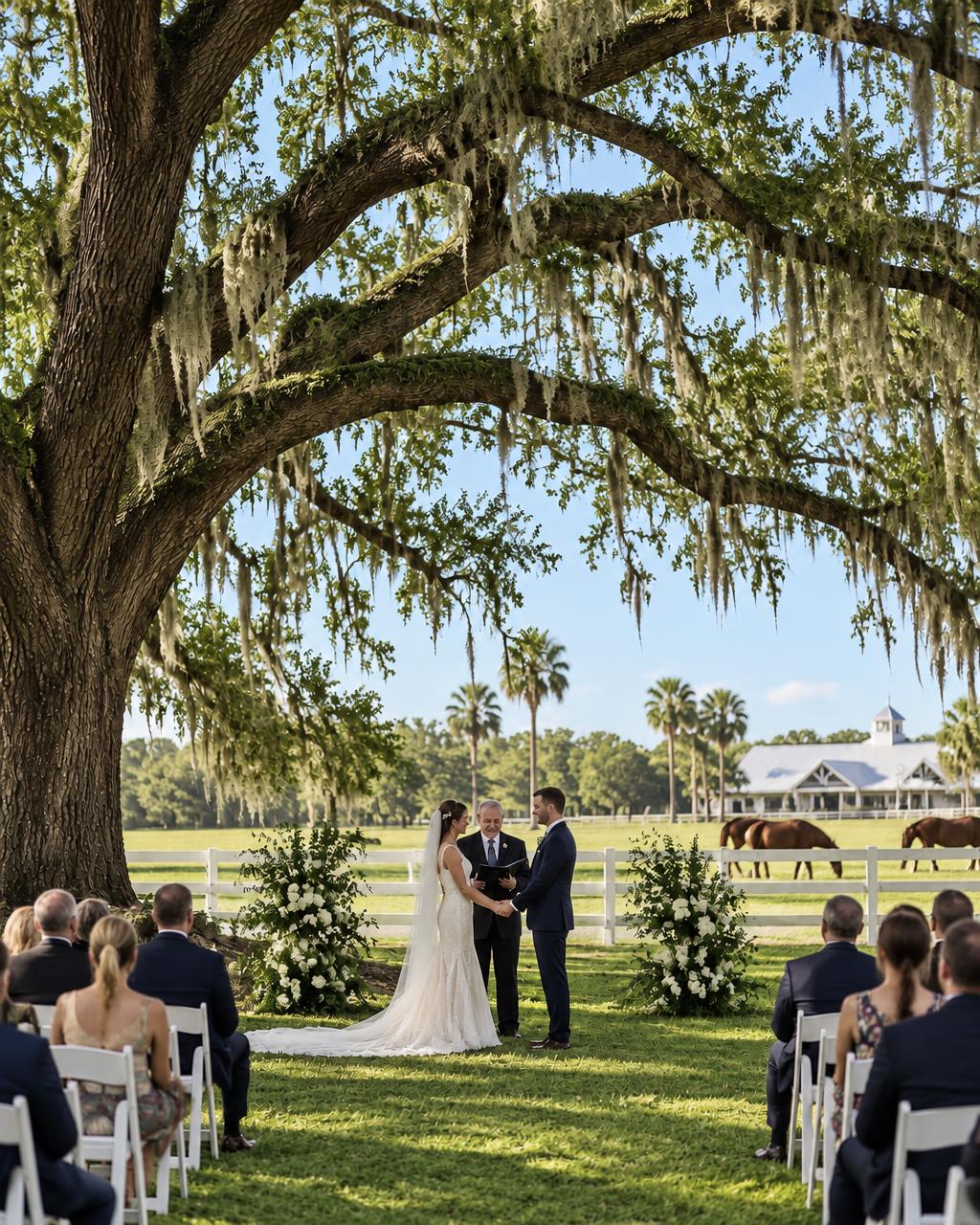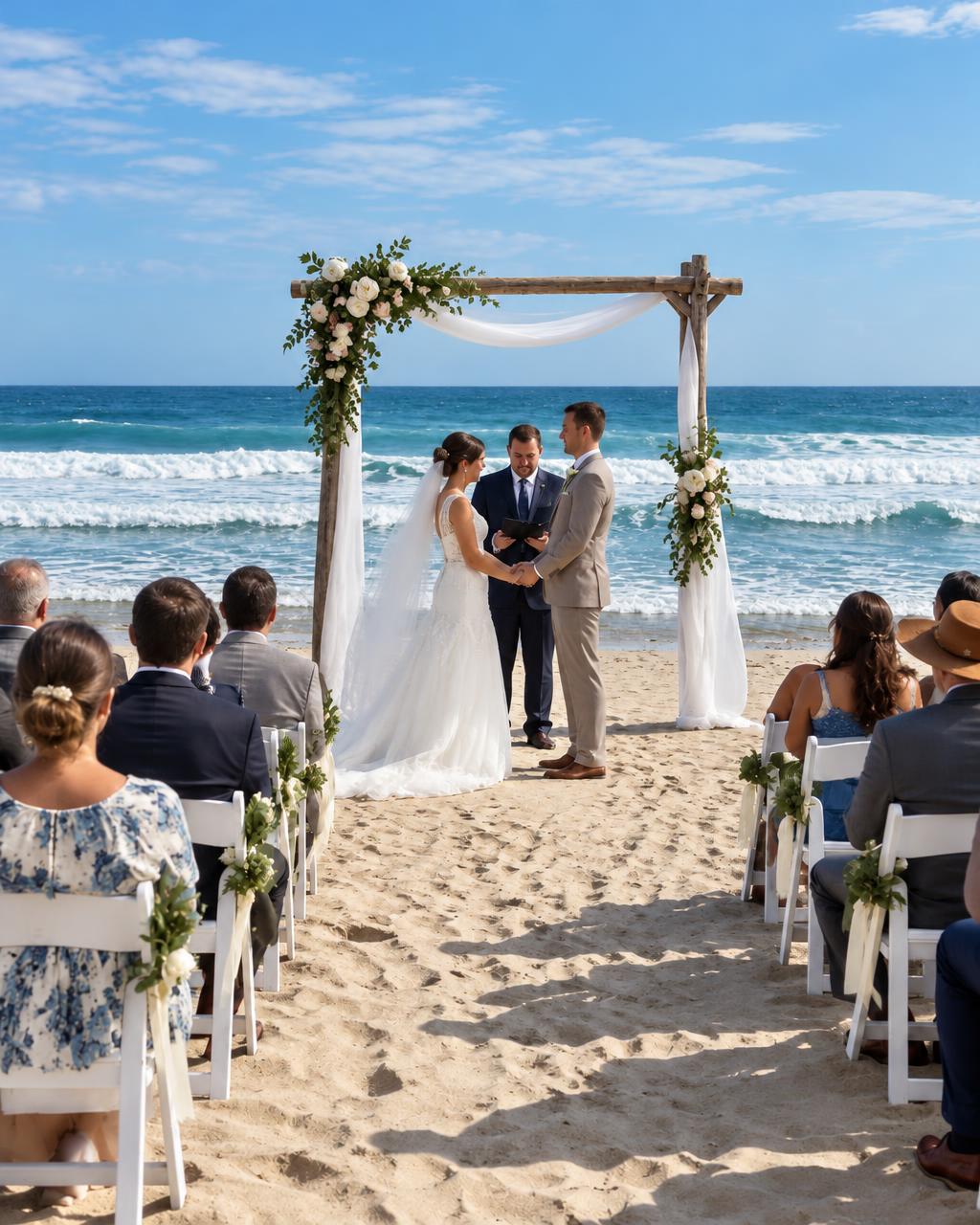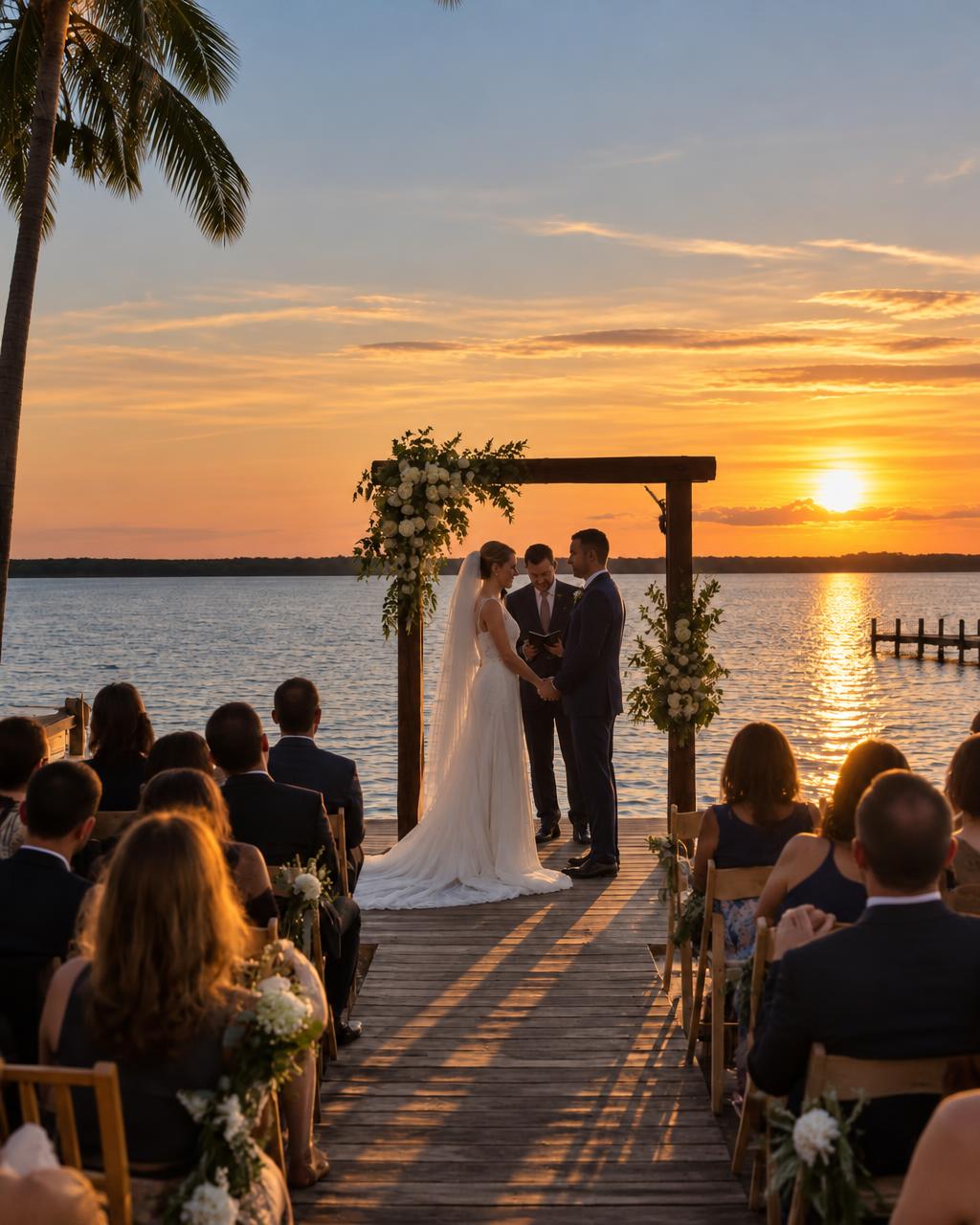
An indoor wedding ceremony offers welcome separation from Florida heat and passing rain, but a roof does not automatically create a comfortable ceremony space. A beautiful ballroom can have a humming air conditioner, bright windows behind the couple, or an aisle that feels narrow once chairs are occupied. These details affect how guests experience your vows and how clearly the ceremony can be photographed and recorded. The best walkthrough considers the room as it will actually function, not just how it looks empty.
For a Central Florida venue, start with the proposed ceremony time, expected guest count, and a realistic furniture arrangement. Then work through light, sound, movement, and access with your venue contact, officiant, photographer, and ceremony videographer. These twelve checks help turn broad questions into decisions someone can carry out. If the indoor room is also your weather backup, give it the same attention as your first-choice ceremony setting.
Tip 01
Evaluate windows at your ceremony time
Ask to see the room near your planned ceremony time, rather than judging it only during a morning tour. Notice whether sunlight reaches the couple’s faces, crosses guest seating, or falls directly behind the ceremony focal point. In Central Florida, a bright afternoon can make window-facing views look dramatically different from a shaded or overcast visit.
Photograph the proposed setup from the back aisle and both front corners to share with your photo and video teams. Ask the venue whether existing shades or curtains can be adjusted and who operates them. If windows dominate the background, discuss rotating the layout or shifting the couple’s position before committing to an arch or floral installation.
Tip 02
Choose a lighting look that keeps faces visible
During the walkthrough, ask the venue to demonstrate the actual lighting settings available for ceremonies. A room may have separate controls for chandeliers, ceiling fixtures, wall lights, and decorative uplighting. Look at a person standing where you will exchange vows, not just at the atmosphere around the room. Their expression should remain easy for guests to see.
Discuss dimming choices with your photographer and videographer before approving a candlelit appearance or saturated color wash. Purple uplighting near the ceremony backdrop, for example, may also color faces and clothing. Record the agreed settings in the setup notes and name the venue staff member who will restore them before guests enter.
Tip 03
Check mirrors, glass and other reflective surfaces
Mirrored walls, glossy floors, glass partitions, and polished columns can create distracting reflections behind or beside the couple. Walk through the room from seated guest height as well as standing height. Look for reflections of service doors, signs, equipment, or people waiting to enter. A reflection that seems minor during a tour may become prominent in the ceremony backdrop.
Share these observations with your décor and camera teams before changing anything. Moving the ceremony position slightly may solve more than covering an entire wall. Ask venue staff what furnishings or approved décor can be repositioned, and leave permanent surfaces untouched. Also check whether a reflective welcome sign faces directly toward the ceremony cameras.
Tip 04
Listen for room noise before choosing the layout
Spend a few quiet minutes in the room with its normal systems running. Listen for air-conditioning hum, kitchen activity, elevator chimes, ice machines, and conversations from adjoining spaces. Ask what else will be happening during your ceremony, especially in hotels or venues with multiple event rooms. An empty weekday tour may not reveal the sound of a neighboring celebration.
Identify which noises the venue can reasonably manage and which belong in your planning assumptions. Staff may be able to redirect a service route or avoid moving carts outside the ceremony doors during vows. Do not build the plan around switching off cooling. Instead, discuss the room’s usual operating conditions with your officiant and audio team.
Tip 05
Account for echo in the room
High ceilings and hard surfaces can make spoken words linger, especially in a mostly empty ballroom. Ask someone to read a short passage from the ceremony position while you listen near the back and along the sides. Notice whether individual words remain distinct. This is more useful than deciding the room sounds fine after a brief conversation near the entrance.
Ask whether approved curtains, upholstered furnishings, or another available room arrangement could help soften the space. Guest seating and attendance will also change how the room sounds, so an empty-room check is only a starting point. Tell your officiant about any noticeable echo and allow deliberate pauses between readings, responses, and transitions rather than rushing the script.
Tip 06
Plan microphones for every speaking role
List everyone expected to speak: the officiant, both partners, readers, and anyone leading a blessing or response. Ask who provides the room’s microphone and speakers, who checks them, and whether readers will use a fixed position or handheld microphone. A microphone at the officiant’s location may not serve a reader standing several feet away at a separate lectern.
Discuss guest amplification and recorded audio as related but separate needs. Your videographer should know what the venue provides without having to assume that the room system supplies the recording. Schedule a brief voice check before guest arrival, and agree who hands off a shared microphone. Confirm personal microphone arrangements with the people involved and your ceremony team.
Tip 07
Test the aisle with actual processional movement
An aisle drawn between rows of chairs can feel very different when people are seated. Ask for a sample arrangement and walk it as you expect to enter, including an escort if applicable. Consider a fuller skirt, two people walking together, mobility devices, and any floral pieces beside the chairs. Check turns at the entrance as carefully as the straight section.
Mark the intended aisle boundaries on the room diagram and keep camera positions out of that walking path. Decide where each processional participant stops and where escorts go afterward. If the entrance begins around a corner or through double doors, rehearse that transition so nobody needs to guess which side to use when the music starts.
Tip 08
Build seating around views and participation
Start with the ceremony focal point, then examine what guests will see from the outer seats and back rows. Columns, tall aisle arrangements, and tightly grouped front-row chairs can interrupt views even in an attractive room. Ask whether a slightly angled arrangement would help, while having the venue confirm a layout appropriate for its space and your guest count.
Reserve specific seats for people who need a clearer view, easier access, or a short route to a reading position. Ask those guests about their preferences rather than assuming the front row is always best. Include seats for escorts after the processional and identify who will keep them available. Share reserved seating details with whoever welcomes and directs guests.
Tip 09
Confirm permission around the altar or ceremony focal point
Before planning décor or camera angles, ask which areas around the altar, platform, or ceremony focal point may be used. Some indoor spaces have permanent furnishings, meaningful objects, or restrictions on where vendors and guests can stand. Get clear answers about moving a lectern, placing an arch, arranging flowers, and positioning equipment before those choices become part of vendor orders.
For a religious or cultural ceremony, ask the officiant or community representative to explain the relevant space and sequence. Do not assume a familiar ballroom arrangement fits every tradition. Share approved standing positions with your photographer and videographer, including any moments when movement should stop. If access is limited, let the teams plan from permitted locations in advance.
Tip 10
Create a setup schedule with a room-ready checkpoint
Ask when each vendor can enter the room and what must happen before their work begins. Chair placement, backdrop installation, lighting adjustments, and audio preparation often depend on one another. If the indoor space is a weather backup, confirm who authorizes the change and when the venue needs that decision to prepare the room before guests are admitted.
Choose a room-ready checkpoint before guest arrival, with enough time for the team to inspect the finished arrangement. At that point, confirm the chair count, aisle, speaking positions, lighting settings, and ceremony materials. Name one planning contact for questions so vendors do not receive conflicting directions. Send the final floor plan with the schedule rather than circulating them separately.
Tip 11
Give doors and late arrivals their own plan
Ceremony doors affect sound, light, and the timing of an entrance. Watch what happens when they open: a bright hallway may appear behind the processional, or lobby conversation may carry into the room. Ask which doors are intended for guest arrival and which staff use for service. Have the venue establish door arrangements rather than improvising them on the day.
Assign someone to coordinate the processional entrance with the officiant and music operator. Agree on a simple readiness cue and the intended moment for opening the doors. Also ask how late guests should be welcomed with minimal disruption, following venue procedures. A designated host can guide them at a suitable pause instead of leaving them uncertain in the doorway.
Tip 12
Coordinate photography and ceremony video positions
Share the same floor plan, processional order, and venue restrictions with both your photographer and ceremony videographer. Ask them to discuss positions for entrances, vows, rings, any meaningful rituals, and the recessional. In a compact indoor room, the central aisle and front corners are especially valuable. Agreeing on movement beforehand reduces competing requests once guests have taken their seats.
Tell both teams about surprises that change where attention goes, such as a reading from the side of the room or a family presentation near the front row. Ask the officiant where they expect to stand during key moments, while respecting the ceremony’s requirements. Keep this coordination focused on recording the ceremony naturally, rather than directing the couple through repeated actions.
Bring Your Ceremony Plan Together
A well-planned indoor ceremony room supports more than a beautiful backdrop. Guests can follow the words, entrances feel intentional, and the people documenting your vows understand where they can work. The most useful decisions are specific: which shades will be adjusted, where readers will stand, who manages the doors, and when the completed room will be checked before guest arrival.
For your next venue visit, bring the proposed floor plan and ceremony timeline, then walk the route from the entrance to your standing positions. Sit in a back-row seat and listen from there. Turn your observations into one shared room plan with named responsibilities, and have the venue, officiant, and photo and video teams review their relevant details.
Explore my wedding ceremony videos, compare ceremony collections, or check your wedding date. Every collection can be booked up to 12 months ahead; couples planning further ahead can join the waitlist without reserving a date.